It has been a week since I returned from my pilgrimage to Egypt. The first few days were spent sharing gifts and stories with my wife and children and readjusting my body clock to the seven-hour time change.
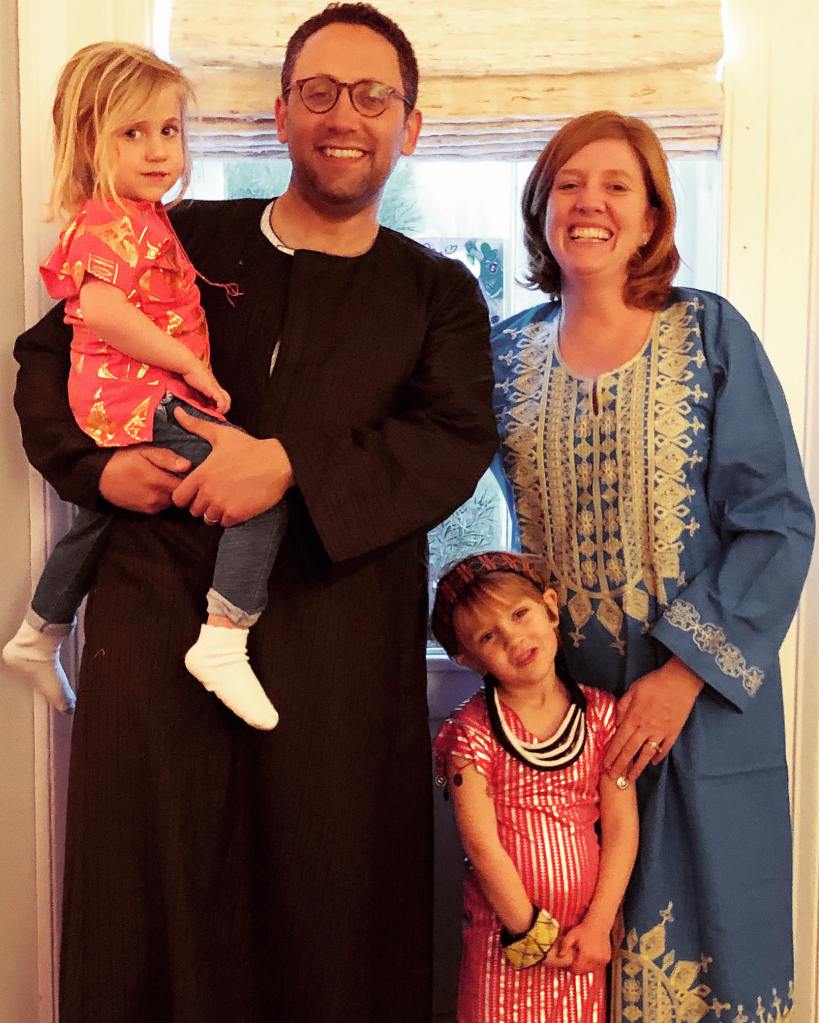
Family pic with clothing bought in Luxor street markets.
It will take me some time to process the profound experiences I’ve had meeting some of my large Egyptian family in Cairo and Luxor. For now, I’m left wondering what’s next? On the other side of this long anticipated journey, how might the bridge now built with family on the other side of the world inform future connection, experiences, and learnings?
What is clear today is just how meaningful it was to not only set foot on Egyptian soil and meet family for the first time but also to retrace my mother’s steps. It’s been nearly twenty years since mom died and this trip was a way to honor her memory and feel close to her again. It was a chance to learn more about her incredible, adventurous years living along the Nile river and consider what she was like as a young woman.
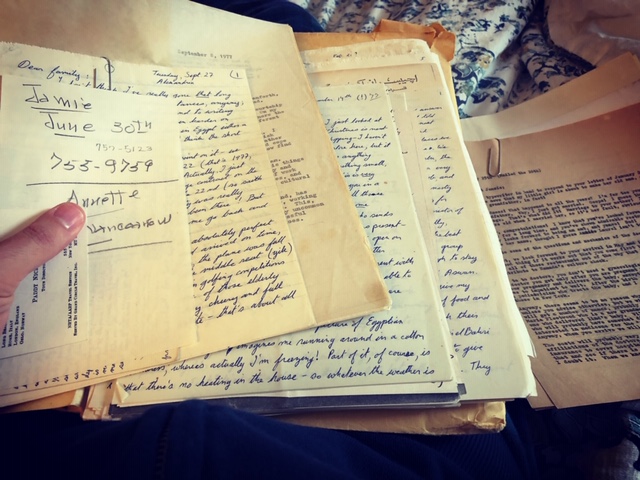
It is fascinating to review her letters and correspondence now that I’ve been to some of the places and met most of the people she references in these very personal missives. Her writings come to life all the more and bring a smile to my face when I consider her observations and musings.
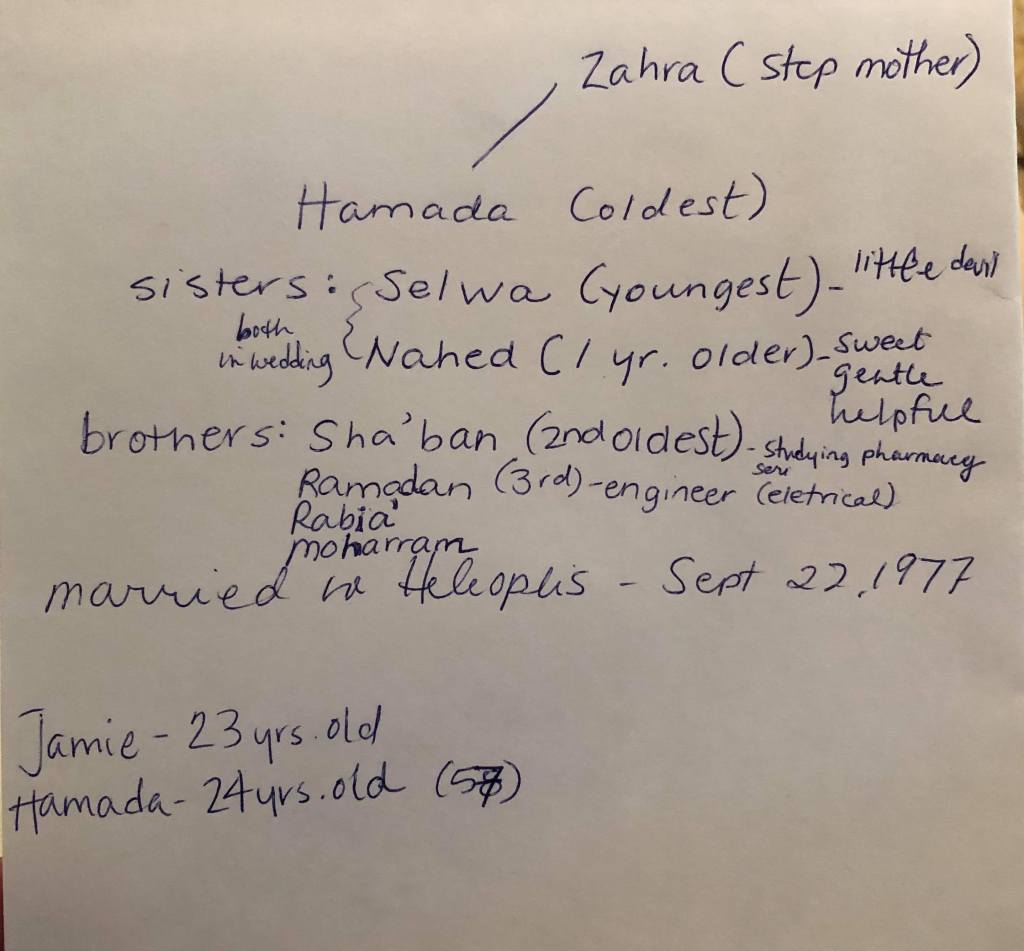
Notes my mom made, for her parents back in NY, identifying my father’s younger brothers and sisters shortly after she married into the family in 1977.
It is simply amazing that my mom, at 23 years of age, jumped into married life in Luxor amid such a radically different country and culture from her own. It’s a side of her that I’m not sure I ever really came to know in the twenty years I had with her growing up in New York.
This opportunity to walk the same streets, lounge in the same street cafes, and tour the same sites she did, just over forty years later, made my mom’s spirit feel very present and almost tangible.
Time in Egypt also offered a brief glimpse at just how differently my life would have been had I been born in Cairo as opposed to Manhattan. I am now fairly convinced, as my father’s eldest, that I would have dutifully followed Hamada into the travel business had I grown up as an Egyptian. I doubt I would have realistically considered any other vocation as a viable option. The sites and sounds; the frenetic pace of the Cairene streets would have been commonplace for me. My mother tongue would have been Arabic and Islam would have been my touchstone instead of Christianity.
This all leaves me confirmed in the opinion that cultural context makes the difference. We human beings, for all our divisions, share a lot of things in common. We share similar hopes and dreams and find daily life enriched by the companionship of family and friends. Culture accounts for the differences around the world in the ways we live out our daily lives and make meaning from our everyday experiences. And I join my mother in firmly believing that these differences are great gifts that enliven us all; gifts we should seek to explore and learn something about for our own sake for the sake of the world that God has made and loves so much.
I suspect I will continue to process this journey for some time and look forward to future chapters of this unfolding story including the day I can bring my wife and children with me to experience Egypt for themselves. I’m grateful I’ve finally taken this big step and trust it will help me to continue to grow into the man, husband, father, and priest I’ve been called to be.
Thanks for following along as I’ve sketched out these reflections!
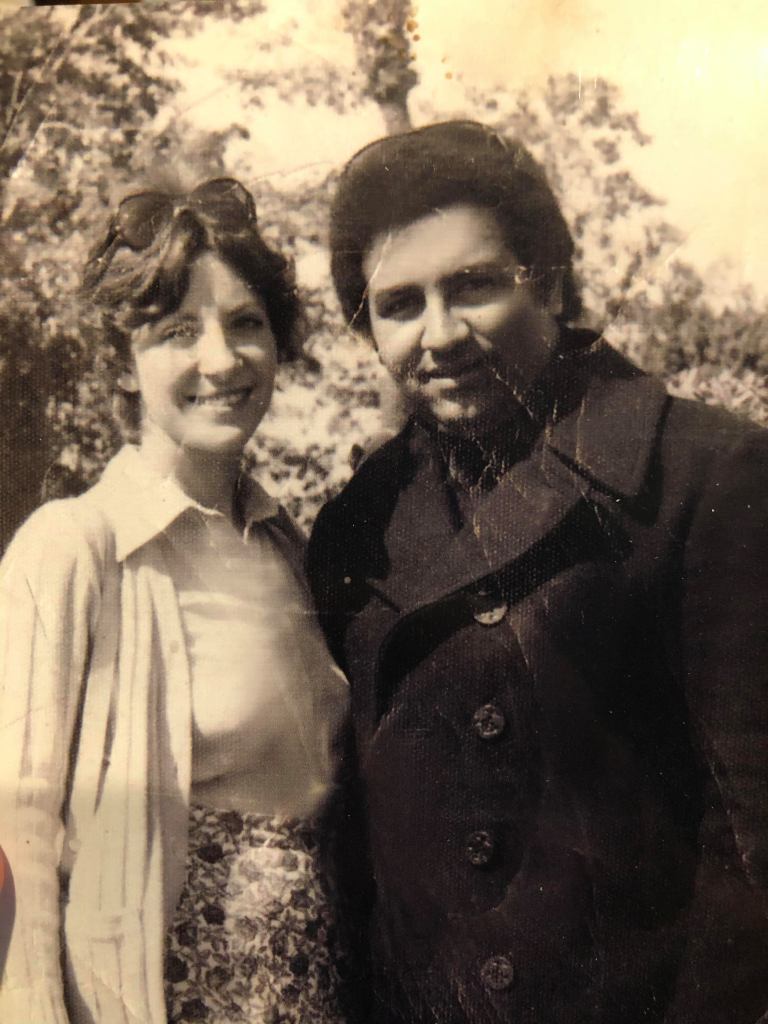
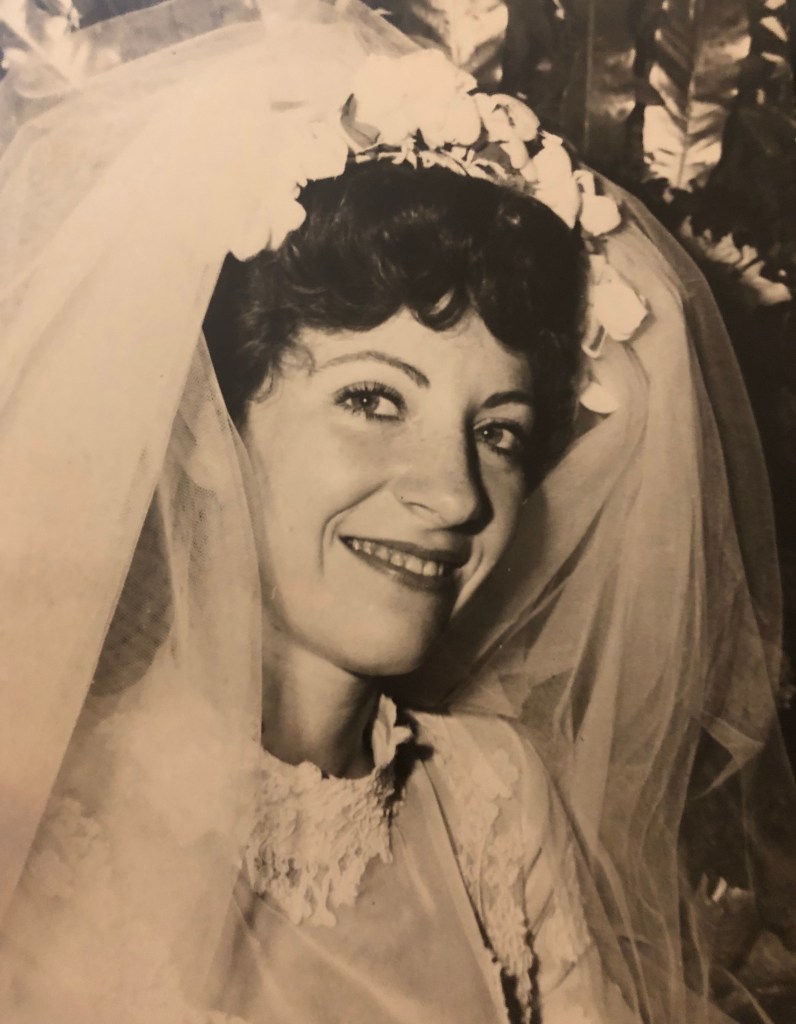
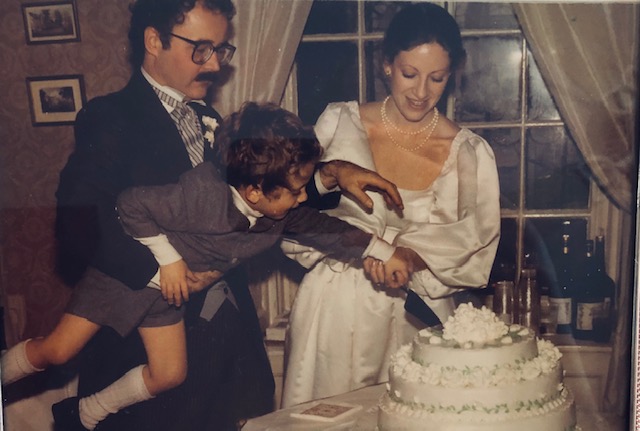
A picture, given to me by my sister, Yousra, of my mother standing with Hamada shortly before they married.
Monday morning began with a leisurely chat alongside uncle Ramadan over Turkish coffee. My uncle is full of thoughts and ideas about everything from the Egyptian economy and state of tourism to domestic politics. He then took my friend, Adam and I on a driving tour of Luxor during the day time.
Ramadan showed us sites around the city particular to our family. We stopped off at the Viking Travel office, our family’s tour company, the school my father attended as a boy, and the cemetery where my grandparents and uncle, Shaban are buried.
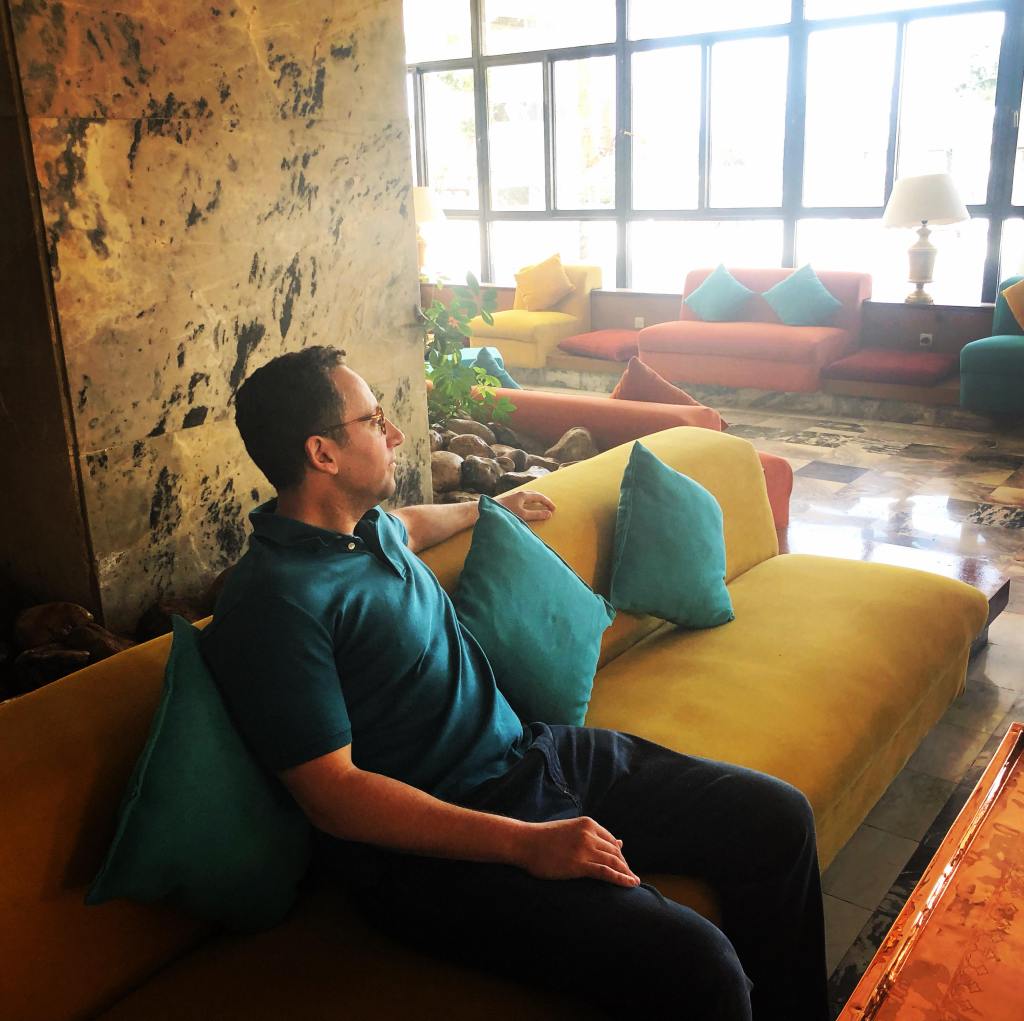
Most noteworthy to me was the chance to walk through the Hotel Etabe that was referenced in so many of my mother’s letters home. In the late 1970’s, when she was married to my father, this hotel was one of the only in Luxor and an important social spot for young, trendsetting Egyptians. This was also a hotel where my grandfather, Abelrahim had a travel desk early in his successful career in tourism.
In the lobby of the Hotel Etabe thinking of mom.
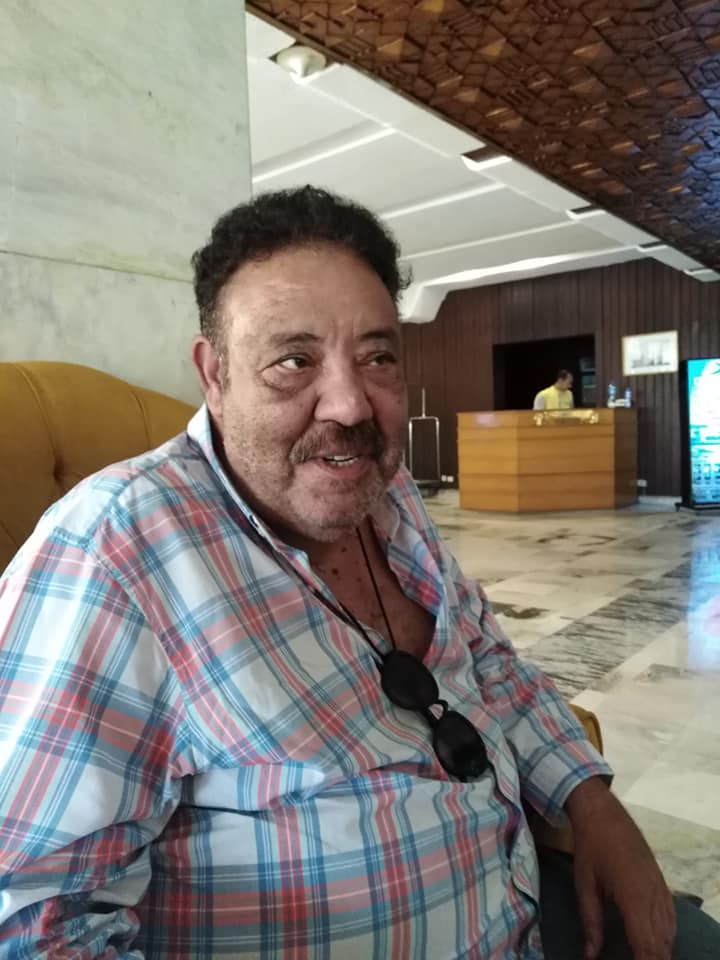
It was very meaningful to me to sit in the lobby of the hotel for a while and think about my then early twenty-something mom writing so many of her letters home from this same spot just over forty years ago. So many people in Luxor, within the family and beyond, remember her fondly and say “Alhamdulilah,” or “Thank God,” with big smiles on their faces, when they realize I’ve finally come home to Luxor after forty years.
Following our tour, we spent much of the afternoon back on my uncle’s cruise liner eating lunch and lounging on the deck overlooking the Nile on another beautiful day in Egypt. We were grateful for this more relaxing and reflective day after the busy pace we’ve kept up since our arrival.
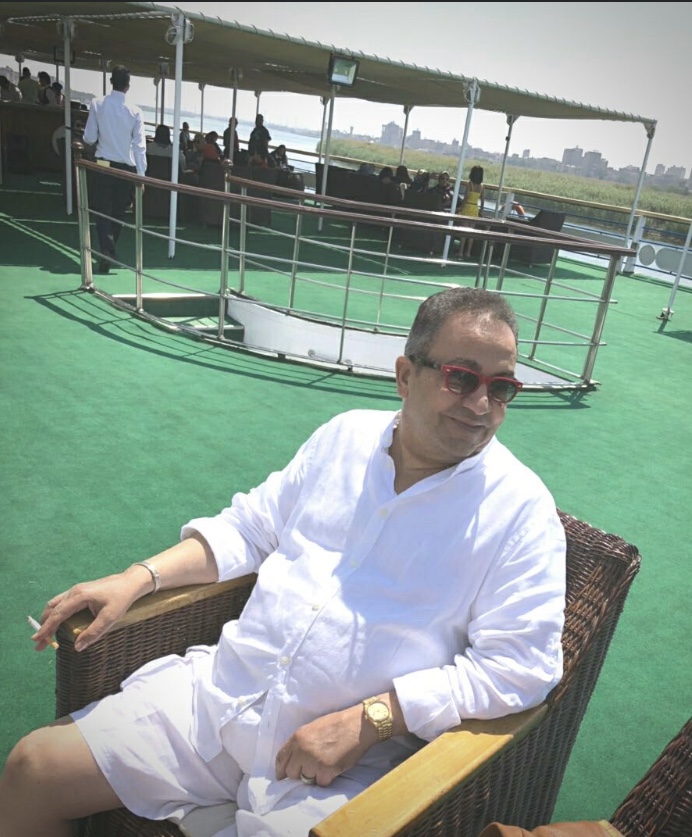
On the deck of my uncle’s cruise liner overlooking the Nile.
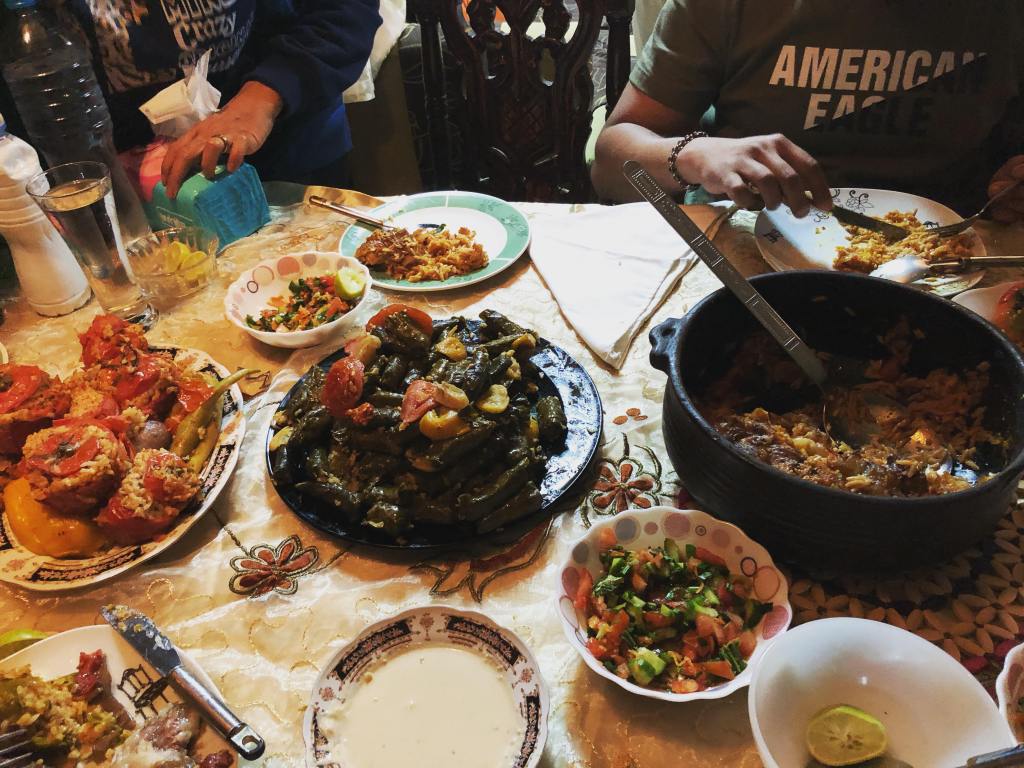
That evening, my father picked us up to have another delicious meal at the family house hosted by my aunt, Selwa.
Each meal we’ve eaten at night has been unique and delicious and the hospitality we have received has been abundant and overflowing.
Day 8 – Luxor (continued)
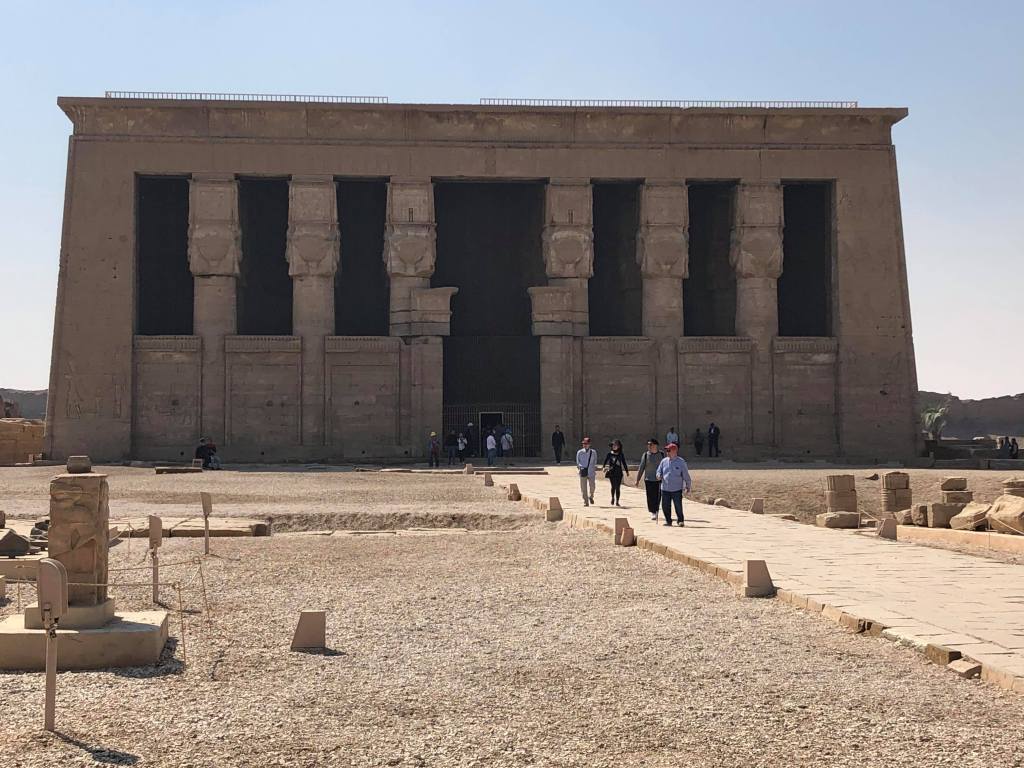
Tuesday morning began with a drive to tour the ancient Dendera Temple, a site located just five kilometers from the village of Qena an hour north of Luxor. This large temple complex dates to around 1700 BCE and was built for the goddess Hathor who, tradition has it, supported the skies with her arms and legs. As in the case of other sites we’ve toured, there is evidence that this sacred ground has been used and appropriated by various religious traditions over the millennia. According to my father, the park like grounds of this temple was a favorite place for he and my mother to escape to for the day and have a picnic together.
The ancient Dendera Temple
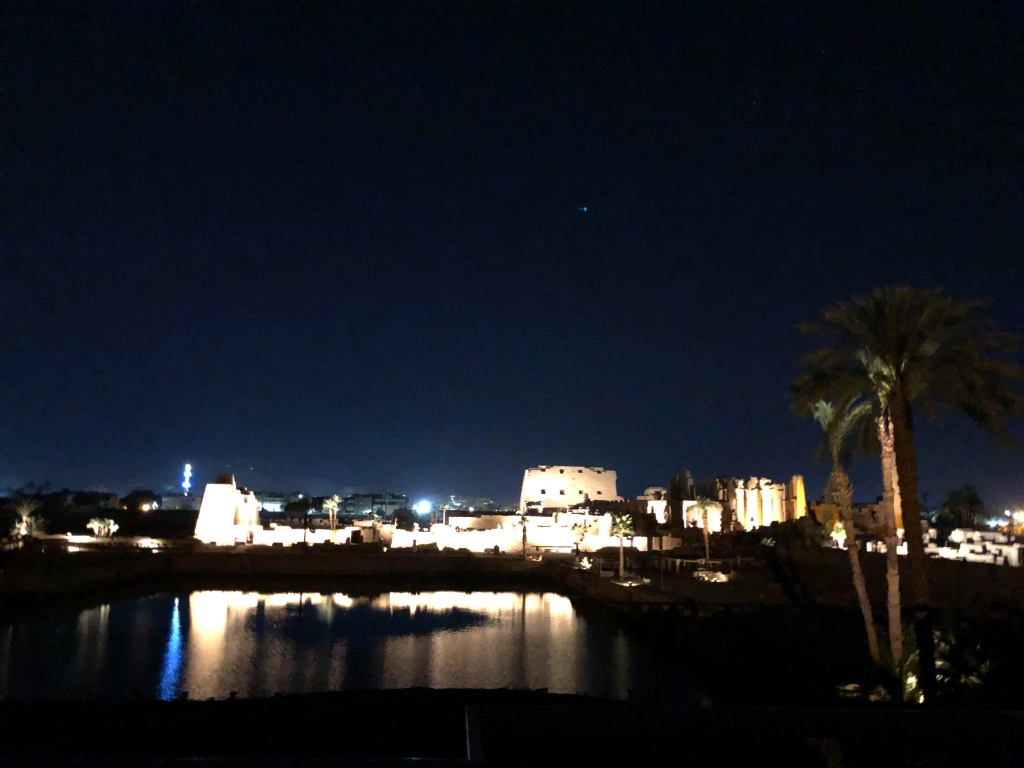
After a quiet afternoon, we headed out to a beautiful light show at Karnak Temple and then connected with my father for our last evening in Luxor.
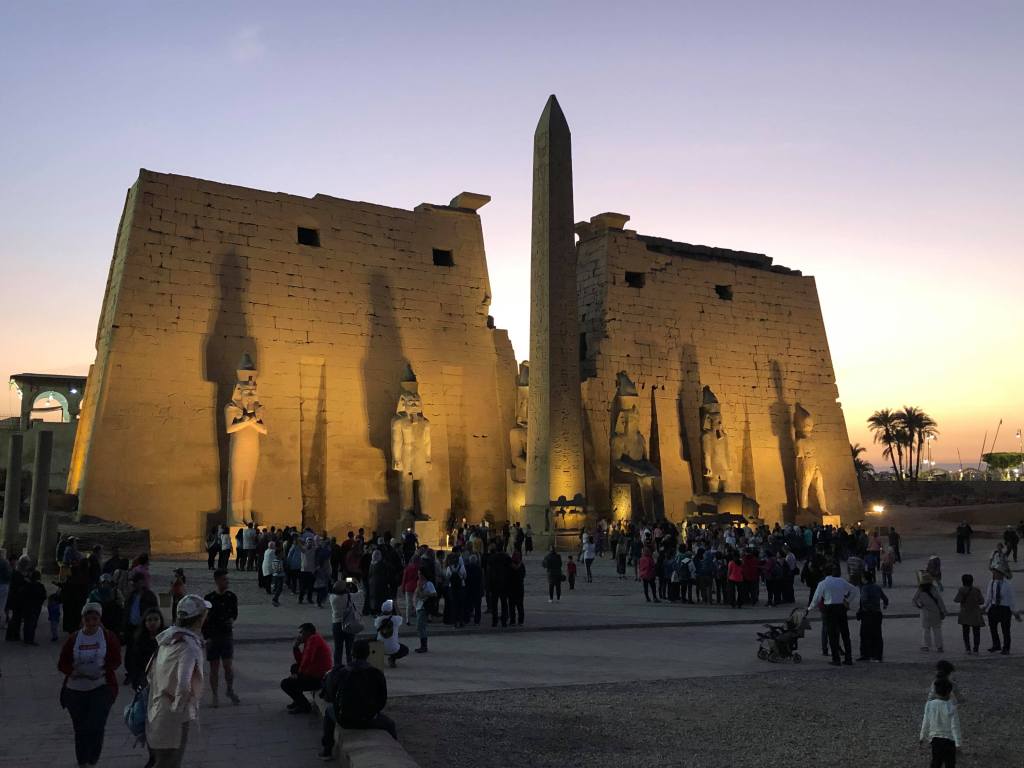
Karnak Temple lit up at night
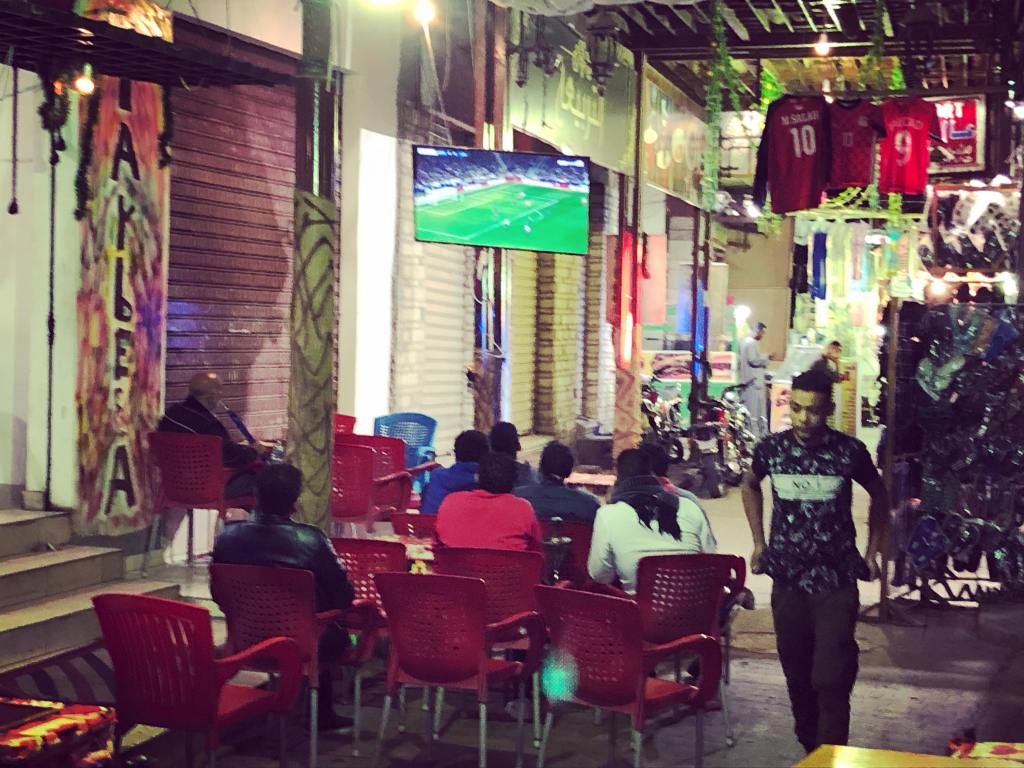
Each evening has typically begun with a Turkish coffee or chance to simply hang around and chat with groups of my father’s friends. These are all men he has known since childhood and their stories could fill the pages of a library of books.
Men in a Luxor street cafe cheer on the Egyptian star, Mo Salah and Liverpool in the Champions League.
This night began with a trip to the office of my father’s balloon company followed by a walk to the tailor where we picked up the galabeya, or traditional Egyptian garment native to the Nile Valley that my father had ordered for me. I wore it out to dinner looking every bit the Egyptian on the streets of Luxor. For someone who has often struggled in life with a sense of belonging, it has been impactful to realize how much my features fit in on the streets here. Many have spoken Arabic to me assuming I am a native.
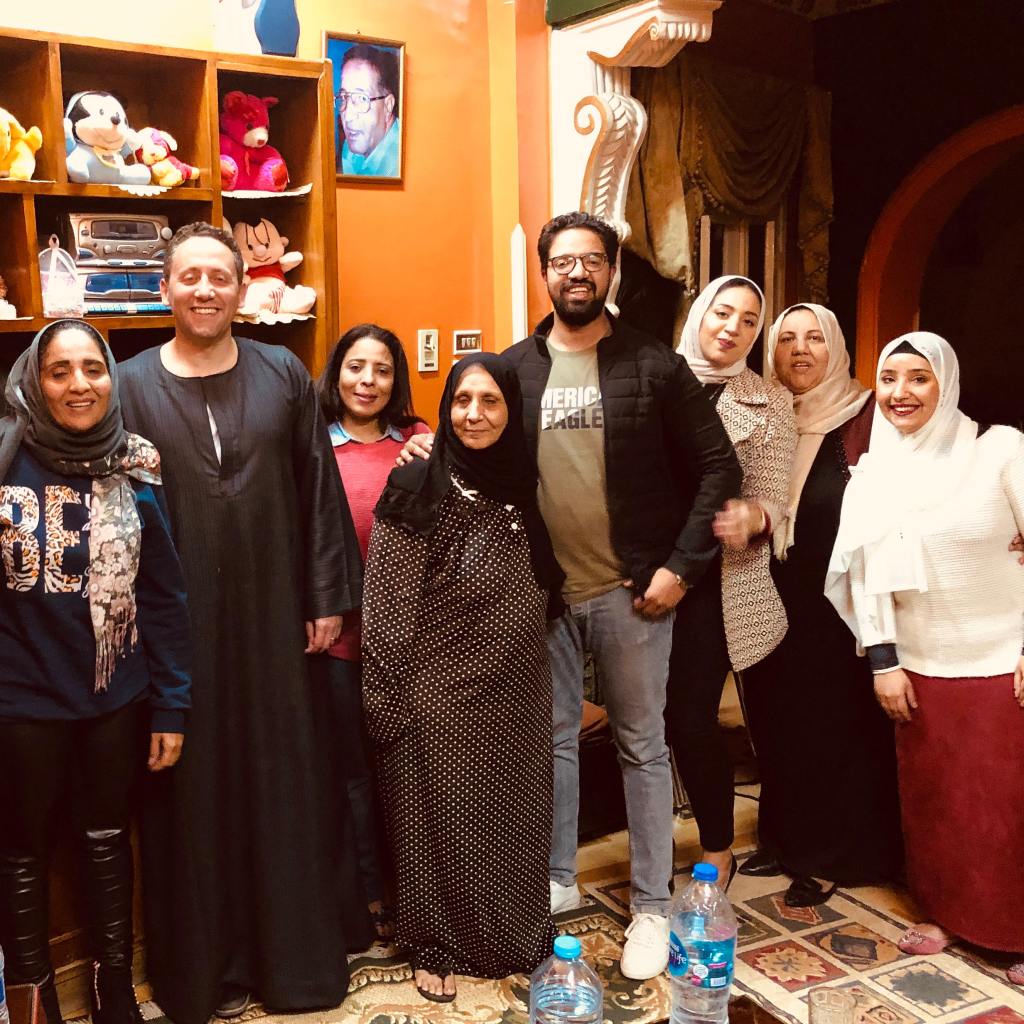
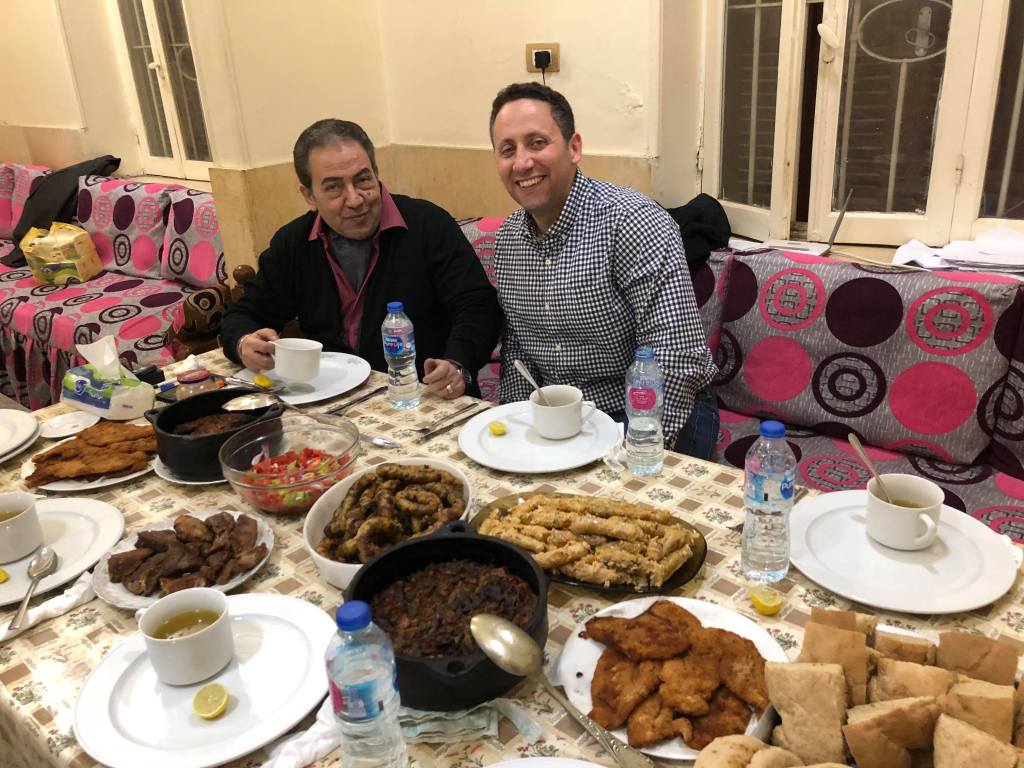
With family on my last night in Luxor.
We dined at the house of cousins of my father and, as in night’s before, chatted about our family, my mother’s time in Luxor, and some of traditional sites of the city. After dinner, we said good bye to my father as he had plans to stay in Luxor for a friend’s wedding. As he dropped us off at the hotel, his final words were, “don’t wait another forty years before returning to Egypt.” I’m sure I won’t.
Day 9 – The Final day (and night) in Cairo
Wednesday morning, we rose early and caught a Nile Air flight back to Cairo where we were again met by my father’s man, Mr. Esam. We dropped off our belongings at an apartment of my father’s back in Heliopolis before we got back in the car to navigate the treacherous and chaotic morning traffic along the avenues of this bustling metropolis.
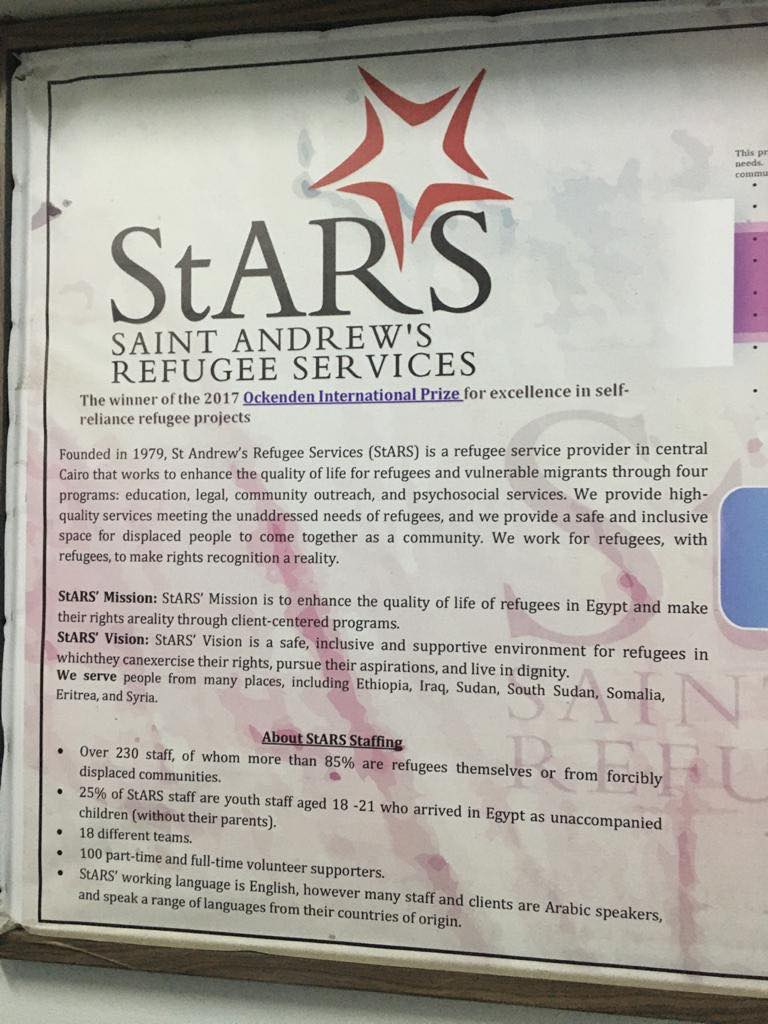
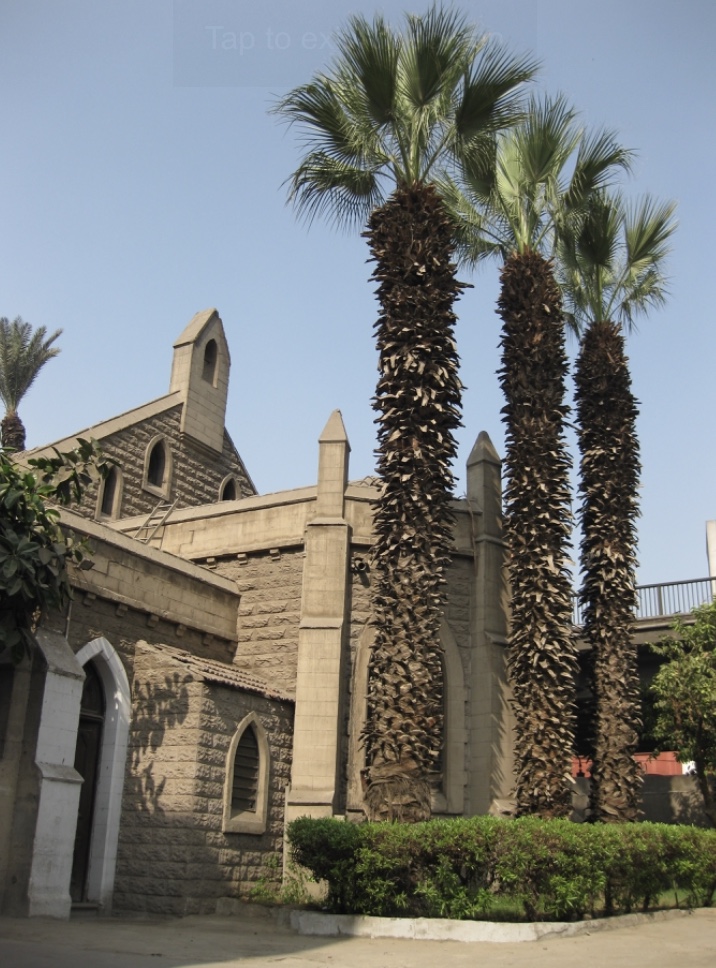
We arrived, an hour later, at St. Andrew’s United Church, the interdenominational ministry for refugees where my friend Adam had worked fifteen years ago. There, we connected again with Adam’s friends, Christie, the pastor at St. Andrew’s and her husband Steve. The church serves a throng of young refugees from across Africa and this work is in large part run by refugees themselves. It is a busy place and inspiring to witness the work there.
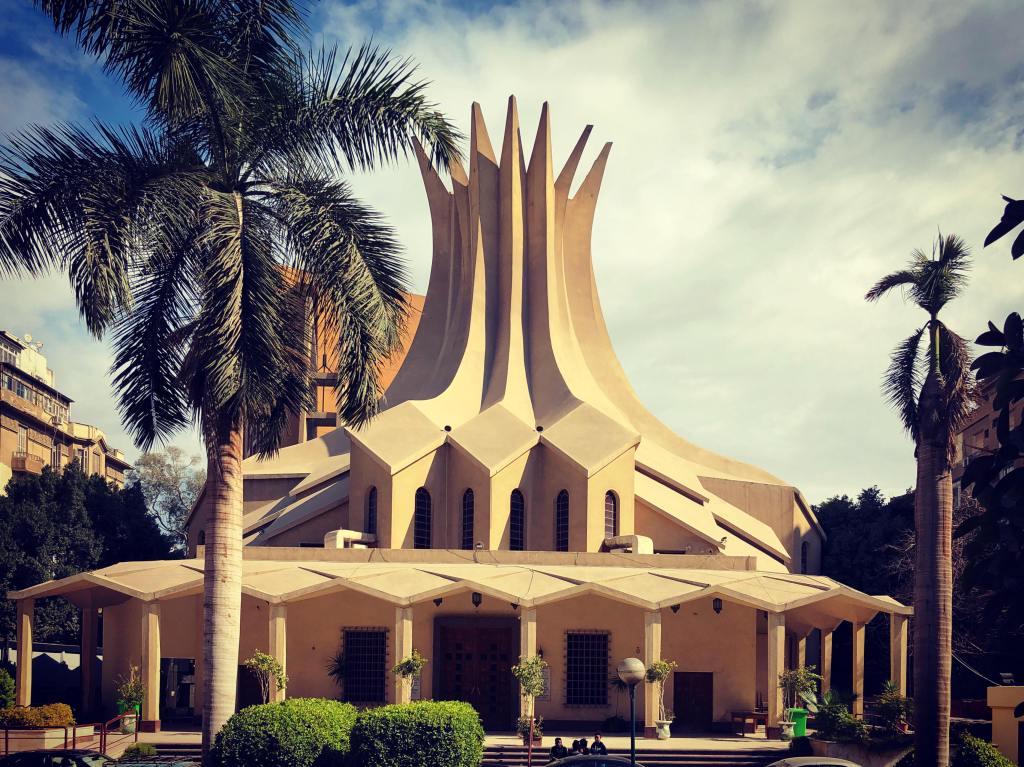
After making plans for later in the day, we hopped in an Uber and took off for the trendy, upscale Cairo neighborhood of Zamalek to visit All Saints Anglican Cathedral so I could see the mother ship of my own denomination here.
All Saints Episcopal/Anglican Cathedral, Cairo
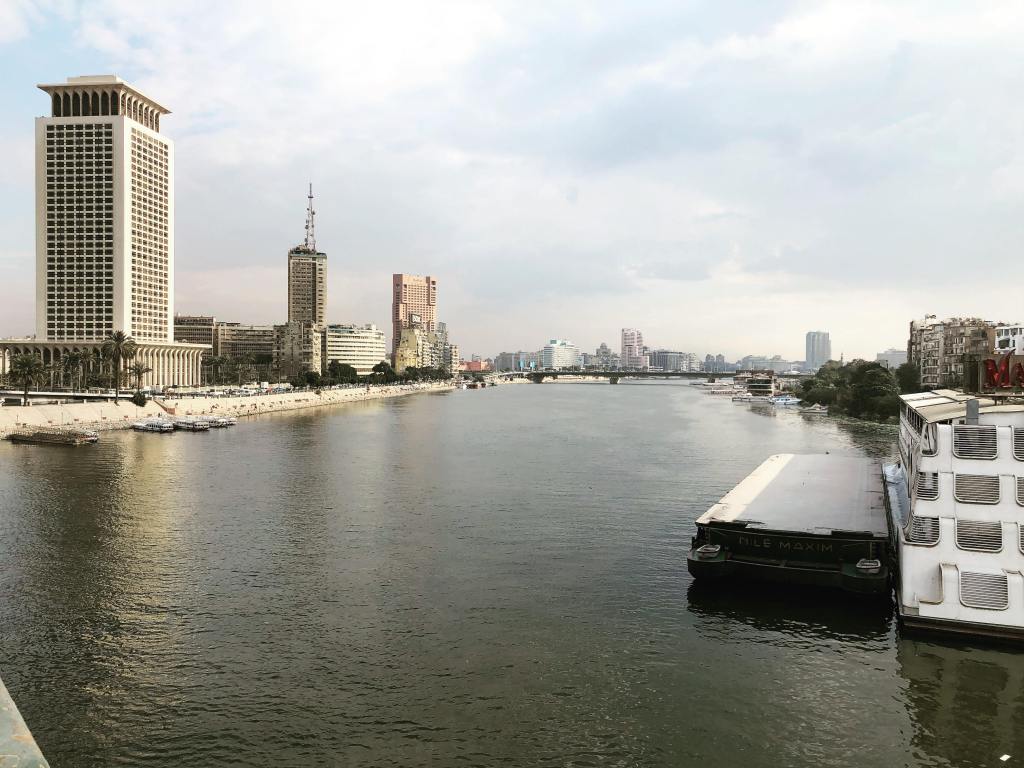
Then, we took a long walk through the neighborhood sometimes joining other Cairenes in risking life and limb by attempting to cross the street as eight lanes of cars whizzed by at break neck pace. We also managed to get caught in a rain storm (my friend, Adam tells me it rains in Cairo about three times a year) …
A view from downtown Cairo overlooking the Nile just before it rained.
Later that day, we reconnected with Christie and Steve and boarded a train at a busy Cairo metro station to head to dinner along the Nile. We were met there by my sister, Yousra and cousin, Sohila who kept us laughing all night long. What a joy it was to be with them one final time.
With Sohila (left) and Yousra
Yousra drove us back to Heliopolis and, after a hug and good byes, dropped us back at the apartment with our bags to rest a bit. Before we fell asleep for an hour or so, my sister, Hend, and her mother, Fatim knocked on our door to drop off a going away present and say goodbye too.
After that we quickly fell asleep only to be awoken shortly after to get taken back to Cairo International Airport and our return flights home.
We are now sipping cappuccino in Rome waiting for our connection to Atlanta. This trip has been full and all I hoped it would be. My father called to say that my visit had made his year. I’m left with a lot to think about and reflect on.
I’ll post at least once more to share some thoughts once I am back in the US.
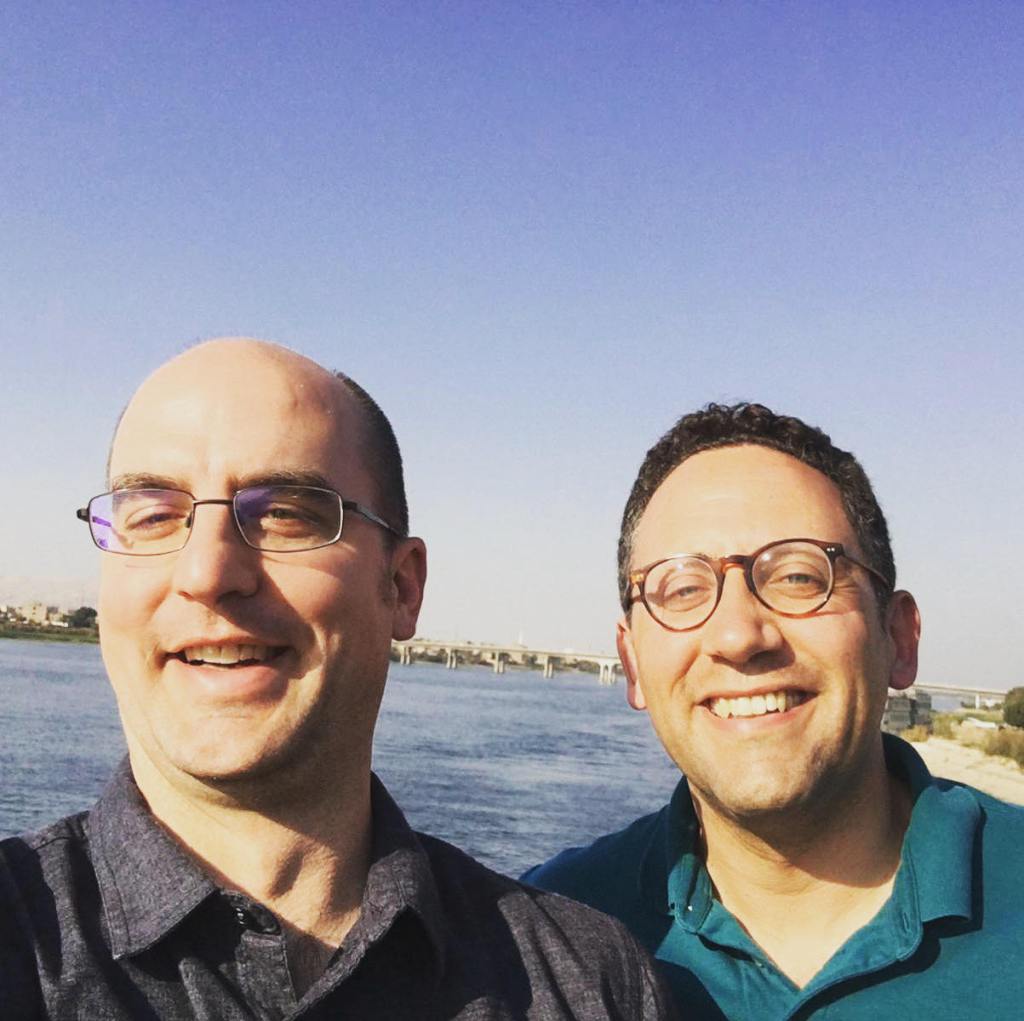
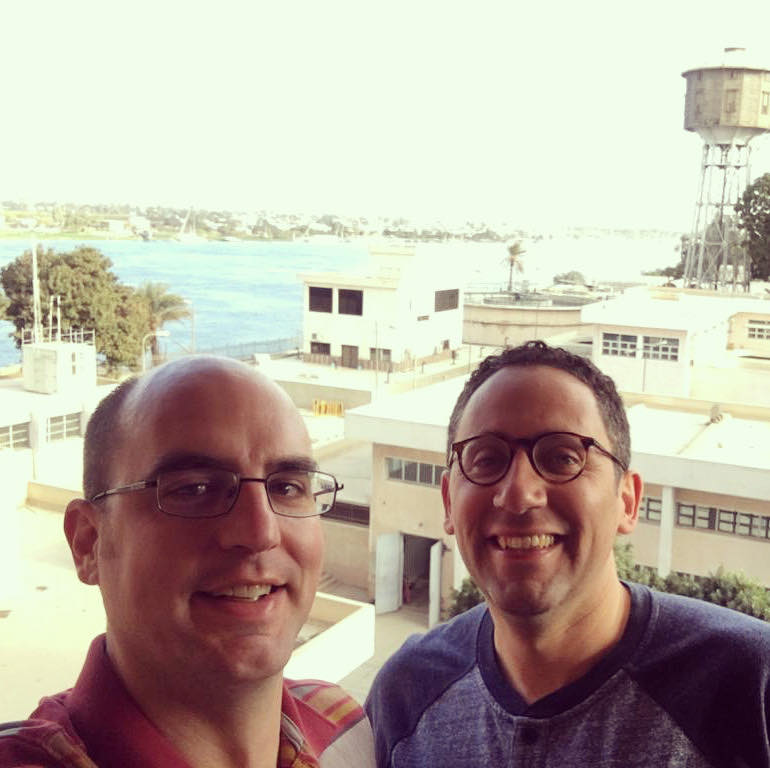
Grateful for my friend and traveling companion, Adam.
On Friday, my eldest sister, Yousra asked if we could spend the day together. After a wonderful conversation over coffee, she took me to lunch at an upscale Cairo restaurant full of young Egyptians. After a while, we were joined by my gregarious and outgoing cousin, Sohila who wanted a chance to meet me too.
We laughed and compared experiences growing up in the United States and Egypt respectively. We also spoke very openly about the unbelievable circumstances of my life vis a vis the large Haggagi family in Egypt. Sohila says she tells friends she has a cousin in America who is a priest and they can’t believe it because our family in Egypt has such deep Muslim roots. My sister said that my homecoming is like a script for an Indian movie! It was a rich conversation full of a lot of laughter.
The last adventure of the afternoon came when Yousra was driving us home and we got a flat tire. So, sister and brother got out of the car and worked together to repair the tire on the side of the road to get us home safely.
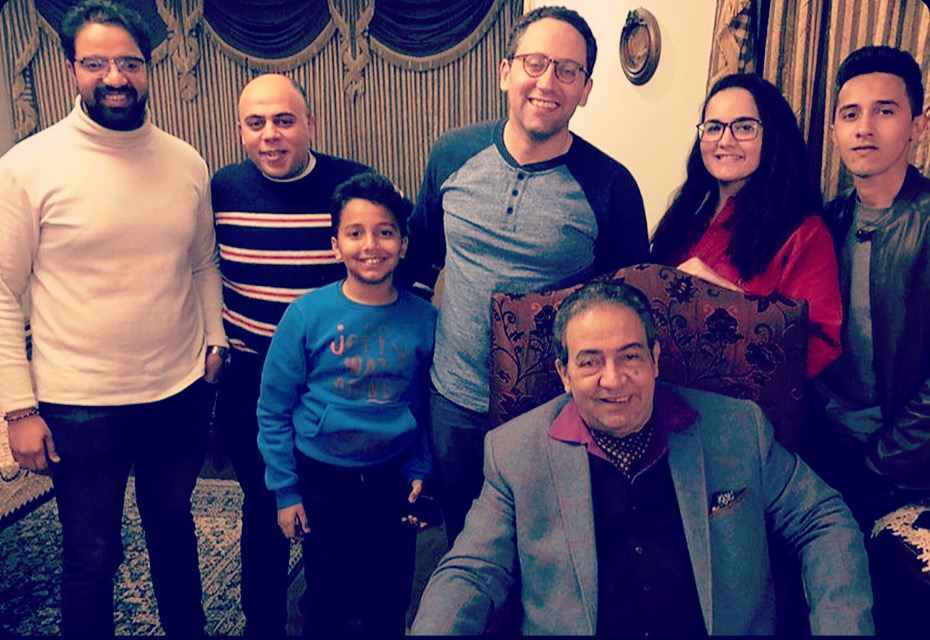
That night, we attended a large dinner at the modern home of my uncle Muharram back in Heliopolis, where I again met several more relatives.
After dinner at uncle Muharram’s house.
Muharram kept looking at me while saying, “wow, Adam,” and noting how unbelievable it was to see me after forty years. My aunt, Nahed, who knew my mom as a child, teared up as she hugged me close. She also cried because she agreed with many in the family that I look very much like my uncle, Shaban who died of cancer about five years ago.
We continue to eat lavishly prepared meals in keeping not only with Egyptian culture around hospitality but also because, in the eyes of my family here, “Adam has finally come home.” On this evening, dinner consisted of a big table of seafood followed by sweets and Turkish coffee (which is offered to us endlessly). While we ate and talked, the African Cup of Nations SuperCup final, involving the Egyptian club team, Zamalek flickered on the screen.
The evening ended somewhat early (by Egyptian standards) because of our scheduled early departure to Luxor on Saturday morning.
Day 5 – (Arrival in Luxor, the Haggagi family’s ancestral home)
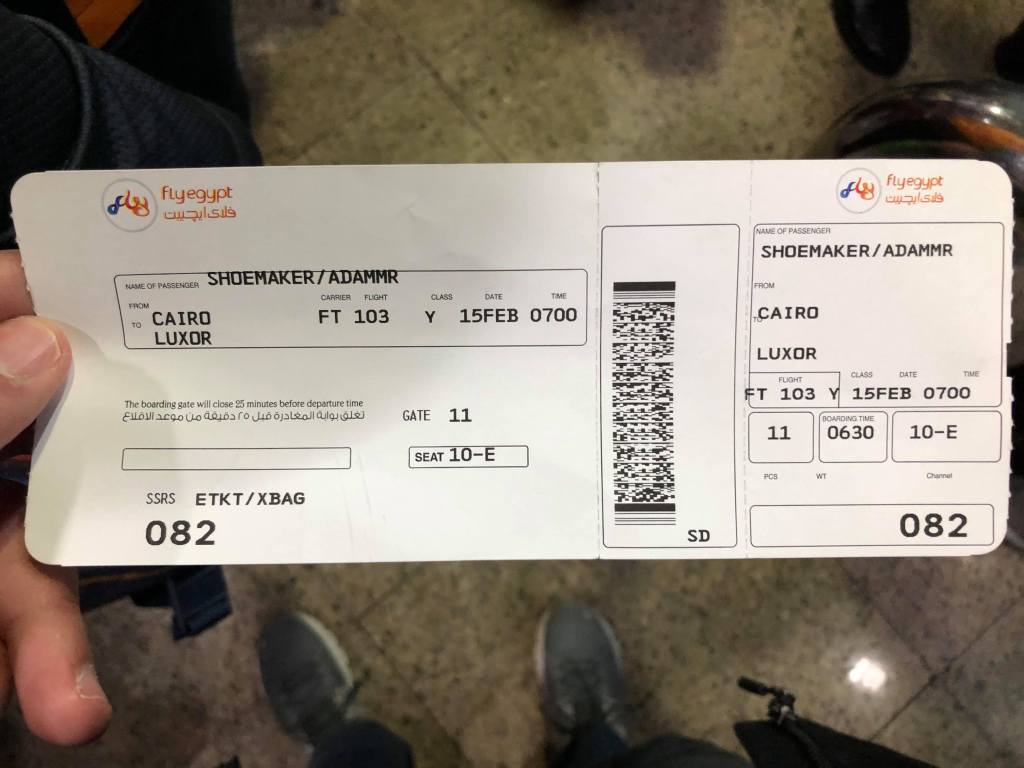
After waking up bleary-eyed at 4:30am, Adam and I were picked up by Mr. Esam and taken to the Cairo airport with my father alongside us. We flew out of the capital city on the domestic airliner, FlyEgypt, at 7:00am and landed in Luxor promptly at 8.
As we walked into the Luxor airport, it became immediately apparent that this was our family’s hometown. My father personally greeted a number of people and, at baggage claim, I met a first cousin of his. My cousin, Sohilia, in commenting on our family roots in Luxor, says that she jokes with friends that everyone in Luxor is a family member of ours!
We checked into our hotel, another wonderful spot overlooking the Nile River chosen by my father to welcome us to Egypt. Thankfully, we got a short nap before beginning our first day of touring Luxor.
As we began to walk around this ancient city, I not only noted for myself that this was the center of the ancient Egyptian world and the Haggagi home but also the place where my story began. I had learned in Cairo, for instance, that it was in fact at the Luxor train station that my mother first met Hamada. She was vacationing with her family along with the American actress, Amanda Plummer, who was a childhood friend of my aunt Yancey’s. I still marvel that my mother took my father up on his request to go out that day and, in time, made the decision to stay in Egypt and get married. It was quite a bold move for an early twenty-something from Manhattan.
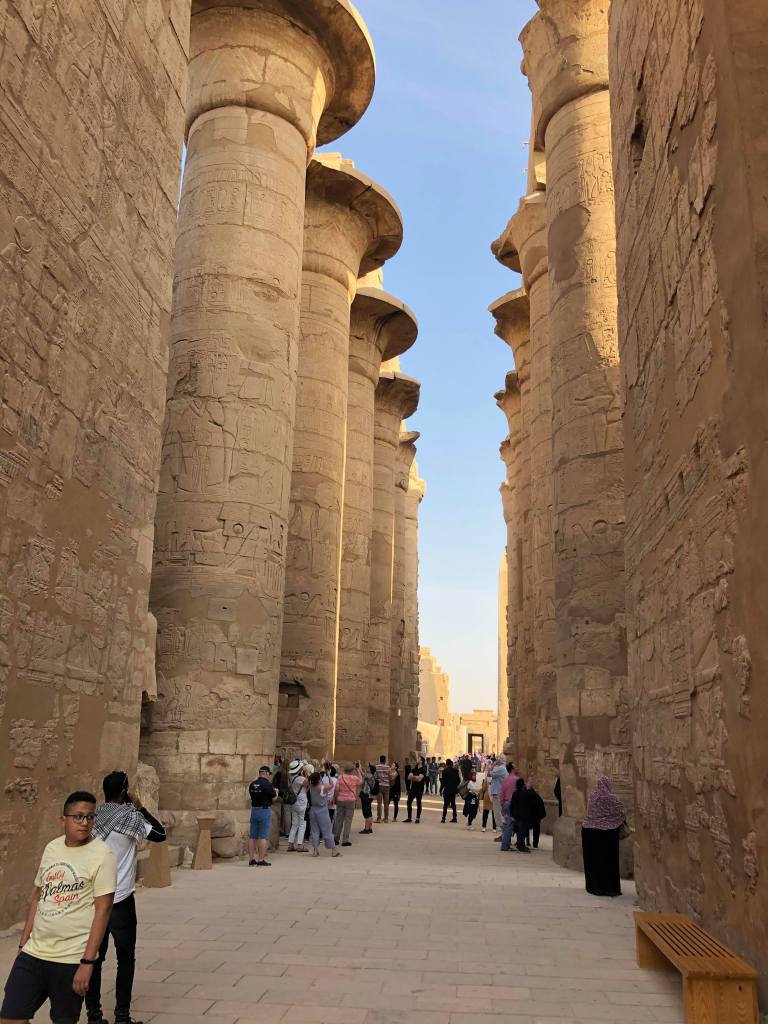
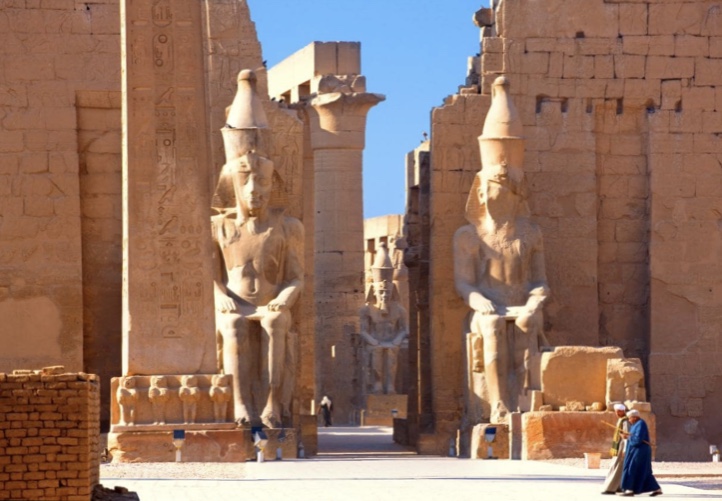
That afternoon, we toured the east side of the Nile, the so-called “City of the Living” because it is the side of the city where the sun rises. We visited the enormous complex that is Karnak Temple which was used by Egyptian Pharaohs as a place for festivals and grand processions. Thousands of years ago, Karnak connected to Luxor Temple that we also saw as the sun started to set. Our knowledgeable guide passed on an enormous amount of information.
Inside the enormous Karnak Temple complex. Luxor Temple at sunset.
The tour of these ancient temples, constructed thousands of years go, and built and rebuilt many times by conquering invaders, Christians and Muslim alike, was breathtaking but it was not the only noteworthy part of the day.
Our guide found out, in conversation, that I was a part of the Haggagi family and, somewhat taken aback, proceeded to spend much of our tour trying to impress upon me how important my family is to Luxor. We learned that the Haggagis (prounced by Upper Egyptianers as Hajjaji, a play on the Arabic word, “hajj,” describing the annual Islamic pilgrimage to Mecca) are descendants of Saudi Arabians and the Prophet Mohammed himself!
My grandfather, Abdelrahim, in my guide’s estimation, is one of the most important figures in the history of Luxor tourism who revolutionized the industry and moved it to what it is today. He told me, in a reverential tone, that everyone in Luxor knows my grandfather not as Abdelrahim (a name that means “the slave or servant of Allah” in Arabic) but as “El Horem,” a nickname meaning strong like a pyramid. He portrayed my family as a prominent one and my grandfather as a benefactor for modern day Luxor. Our guide knew many of my family members personally and talked about them for much of our tour.
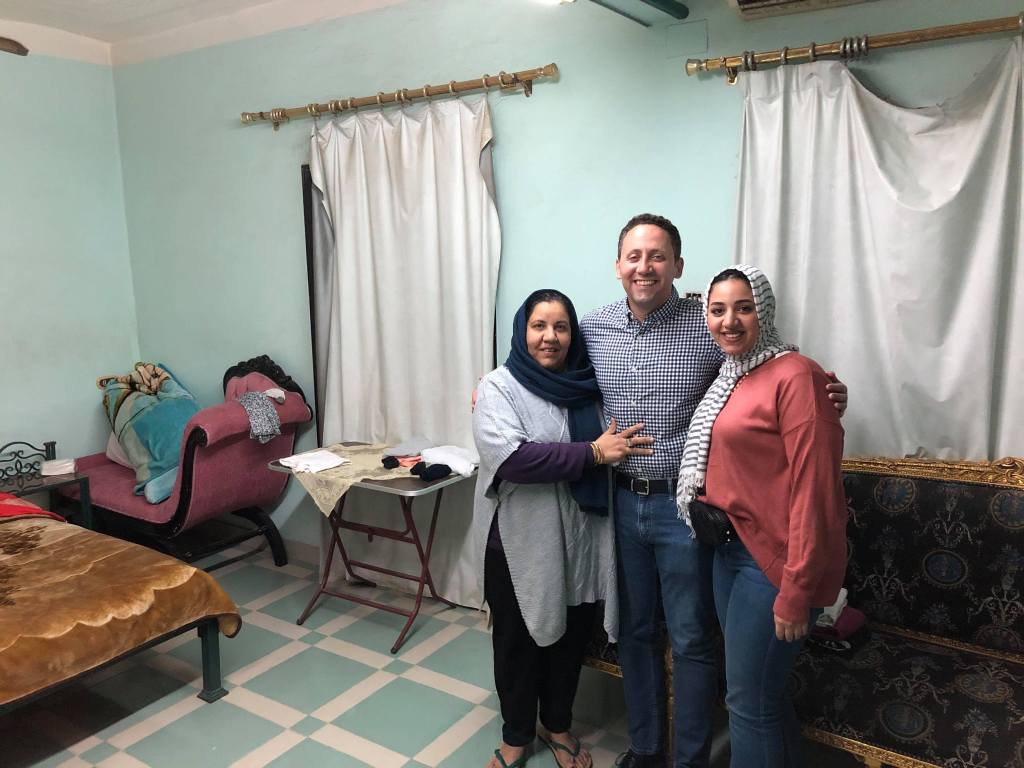
That evening, we were picked up by my father and taken to the family compound, where he once lived with my mother, to have dinner with my aunt Selwa and her family. As we drove through the winding and dusty streets of downtown Luxor, my father kept stopping to introduce me to cousins and other relatives. I really do seem to be related to most of the people in this city. My father says that everyone keeps noting what a blessing it is that I’ve finally come to Egypt. Once we arrived at the family home, we again feasted on an enormous celebratory dinner as we all tuned into a Liverpool soccer match cheering on the Egyptian soccer star, Mohamed Salah. It was a great dinner and Liverpool won 1-0.
Dinner with my father and other relatives at the Haggagi family home in Luxor. With my aunt, Selwa and cousin, Ghada in the room my mother and father lived in during the late 1970’s.
Day 6 – Luxor (continued)
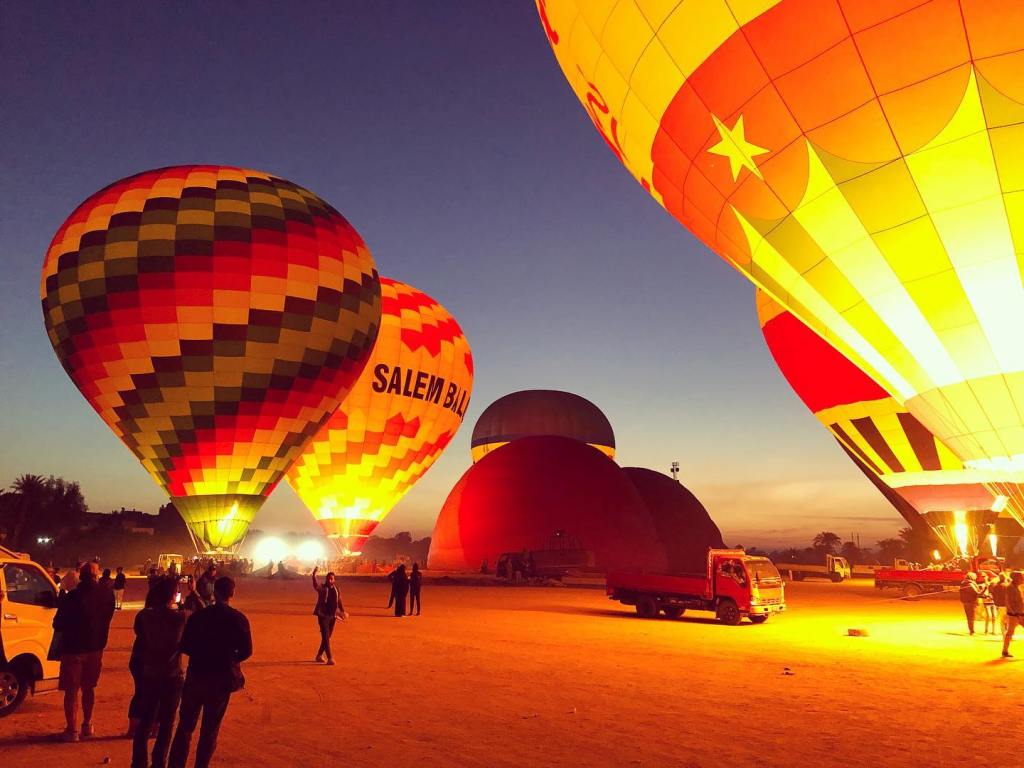
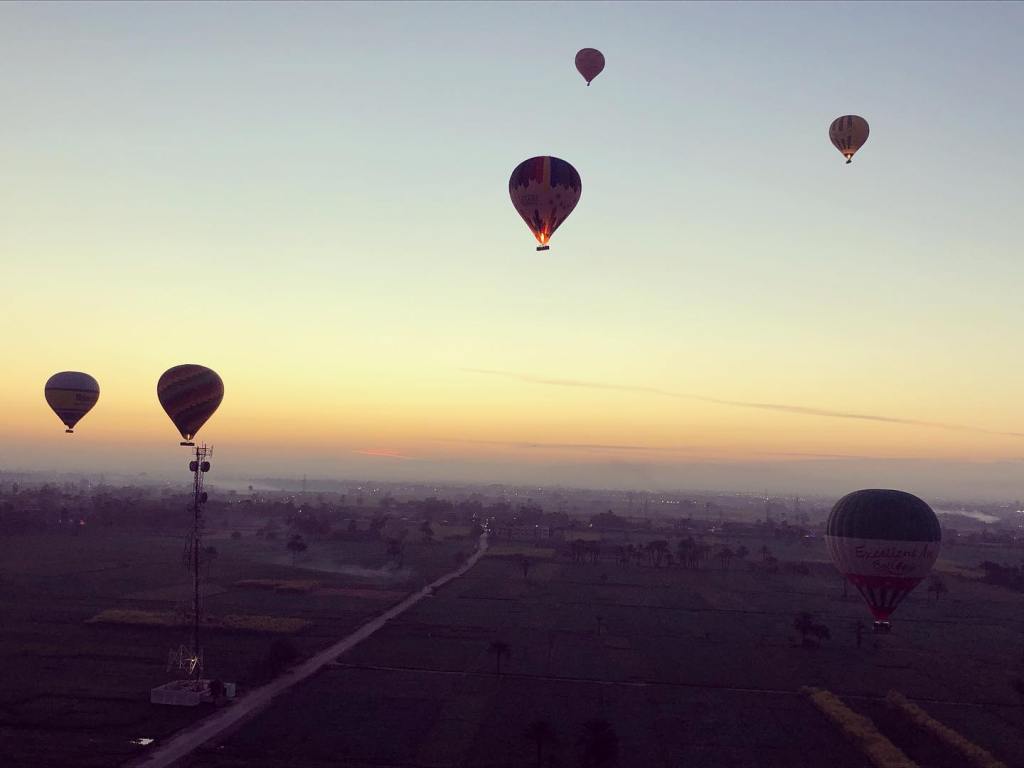
Sunday morning began bright and early with a 5:00am departure for an early morning balloon tour set up by my father and cousin, Abelrahman, who is training to be a balloon pilot. Though weary after the early rise and a late night out, my friend Adam and I both agreed the expedition was completely worth it!
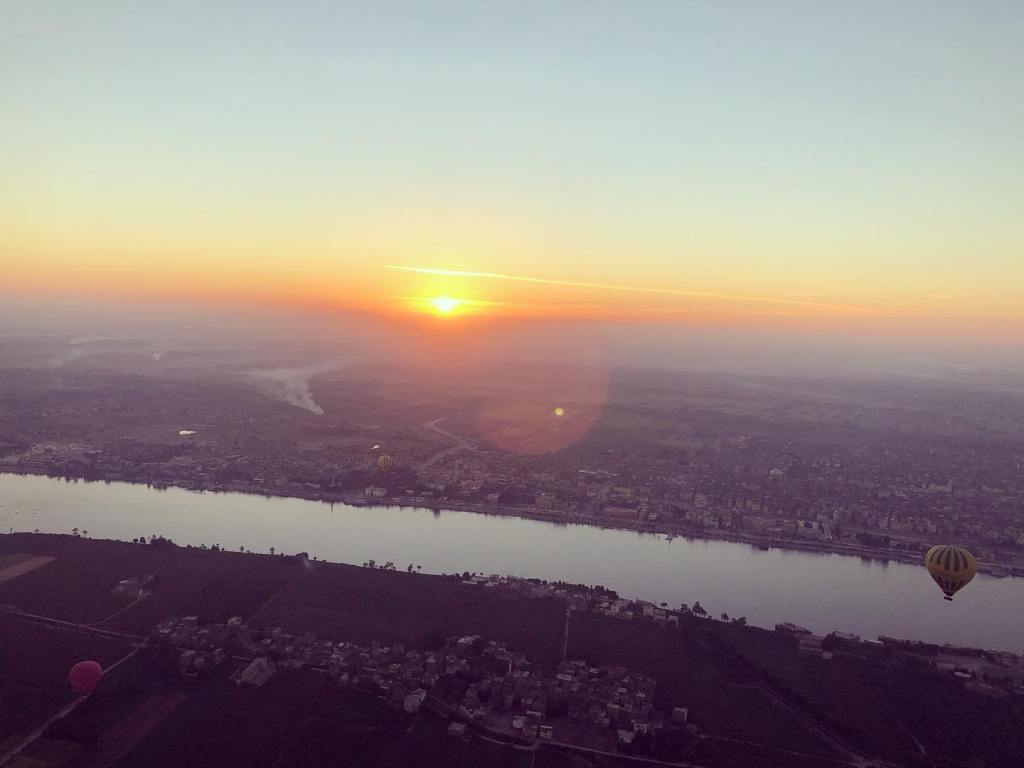
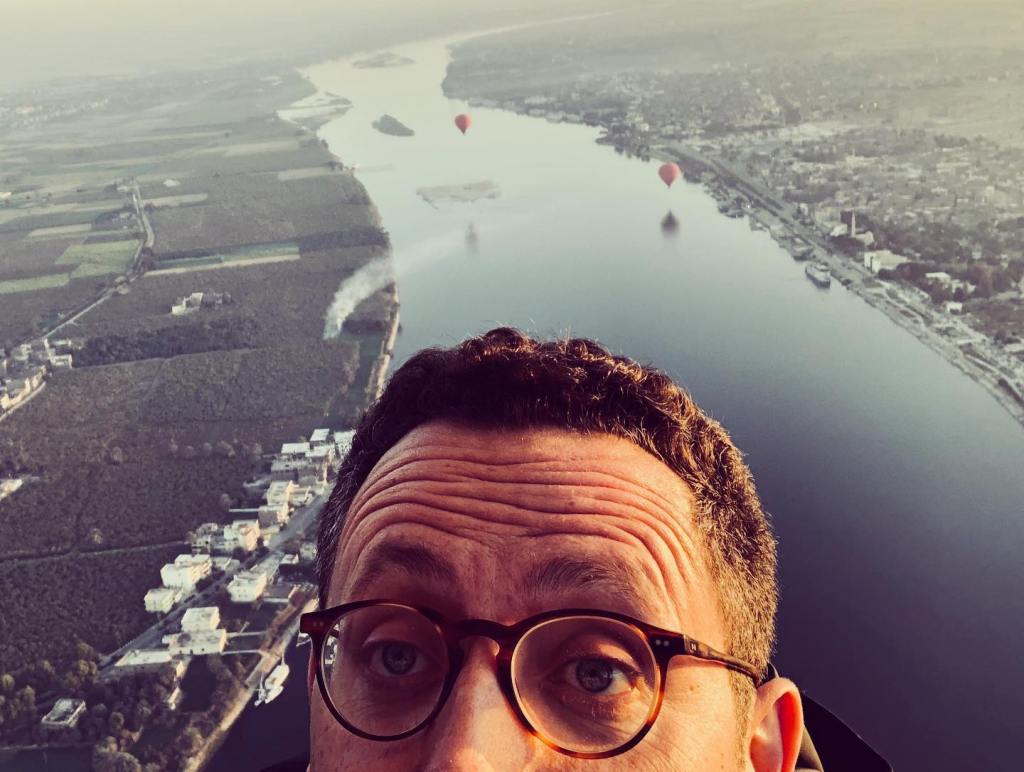
As we gently soared through the air gazing down at an aerial panorama of Luxor with the sun rising over the Nile, the moment certainly felt like its own kind of church. Farmers down below, cutting sugar cane and pushing their donkeys along dirt paths, looked up and waved at us as we sailed past. It was breathtaking.
The balloons being blown up before we took off. Sunrise along the Nile River.
Following our balloon ride, we quickly grabbed breakfast before heading off again to tour the so-called “West Bank” or “City of the Dead.” This is where the kings and queens of Egypt were buried thousands of years ago along the side of the Nile where the sun sets.
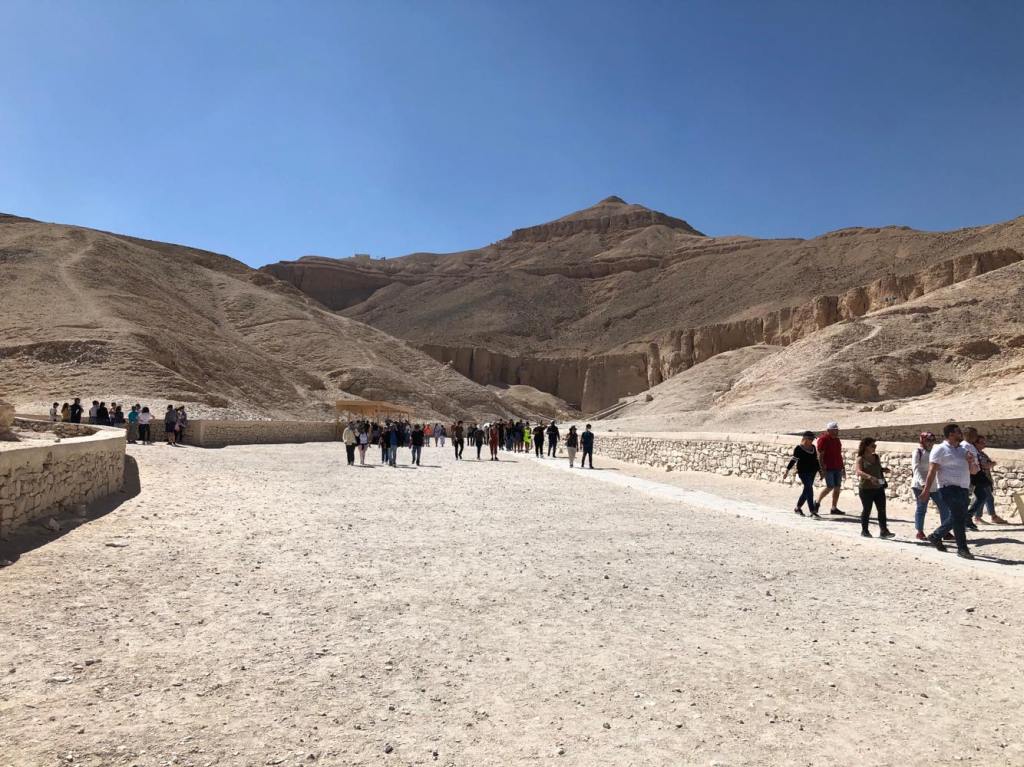
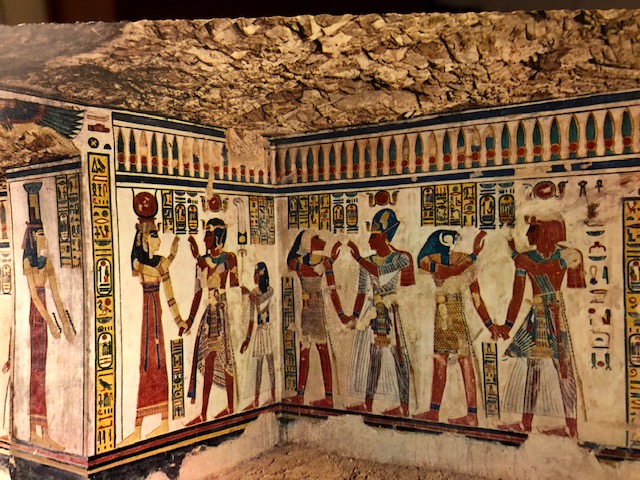
As we toured the famed Valley of the Kings and the mortuary temple of Queen Hatshepsut, I was struck by the sheer grandeur of these sites as well as the theological imagination of ancient Egyptians. As with previous sites we’ve toured, it is also clear that this sacred ground has been utilized over the millennia by many different faith traditions reflecting the diverse spirituality of Egypt. First came the spiritual traditions of ancient Egypt, then came Christianity and an era when many of these sites were used as desert monasteries and havens for Christians to hide from persecution, and then came Islam and the erection of mosques.
Walking through the Valley of the Kings on a hot afternoon in Upper Egypt.
After resting that afternoon, we were picked up and taken to visit my uncle Ramadan aboard, the Royal Viking, the cruise liner he owns and operates along the Nile. Ramadan is a jovial and gregarious man who is larger than life in so many ways.
Uncle Ramadan holding court aboard the Royal Viking.
It was enjoyable to watch he and my father rib one another and share their memories of my mother’s time in Egypt over dinner. Throughout this day, I have been struck by just how rooted the Haggagi family is in the city of Luxor. It’s amazing to consider the depth of connection my family has with this ancient and sacred city. As in previous days, I have continued to be warmly welcomed to take my place in this familial landscape and humbled by the generous spirit I have encountered.
Happily, we have a less scheduled day tomorrow but will begin with a coffee at the Hotel Etap, where my mother and father spent a lot of time during their married years.
On Tuesday afternoon of February 11th at 4:30pm local time, after nearly fifteen hours of travel, we finally arrived in Cairo. Words cannot describe the emotions of setting foot on Egyptian soil for the first time. While weary from the jet lag, it was thrilling to begin this long-anticipated adventure.
We were met at the airport by Mr. Esam, a close friend and colleague of my father, who quickly ushered us through airport security and into a waiting van. From there we headed to Heliopolis and, after winding our way through the controlled chaos of Cairo traffic, arrived at my father’s office. Here we saw my father and I met, for the very first time, my eldest sister, Yousra and youngest brother, Hamza. It was surreal to finally begin to meet the brothers and sisters I have longed to see for years. They greeted me with a warm embrace.
After some conversation, Yousra and Hamza took my friend Adam and I for a short walk to the apartment of my father’s stepmother, Zahra. Zahra was anxious to meet me because my mother had lived with her before getting married to my father in the late 1970’s. She remembered helping to prepare my mom on her wedding day and fondly recalled the time they shared together. She even gave me the photo (below) of the day my mother got married.
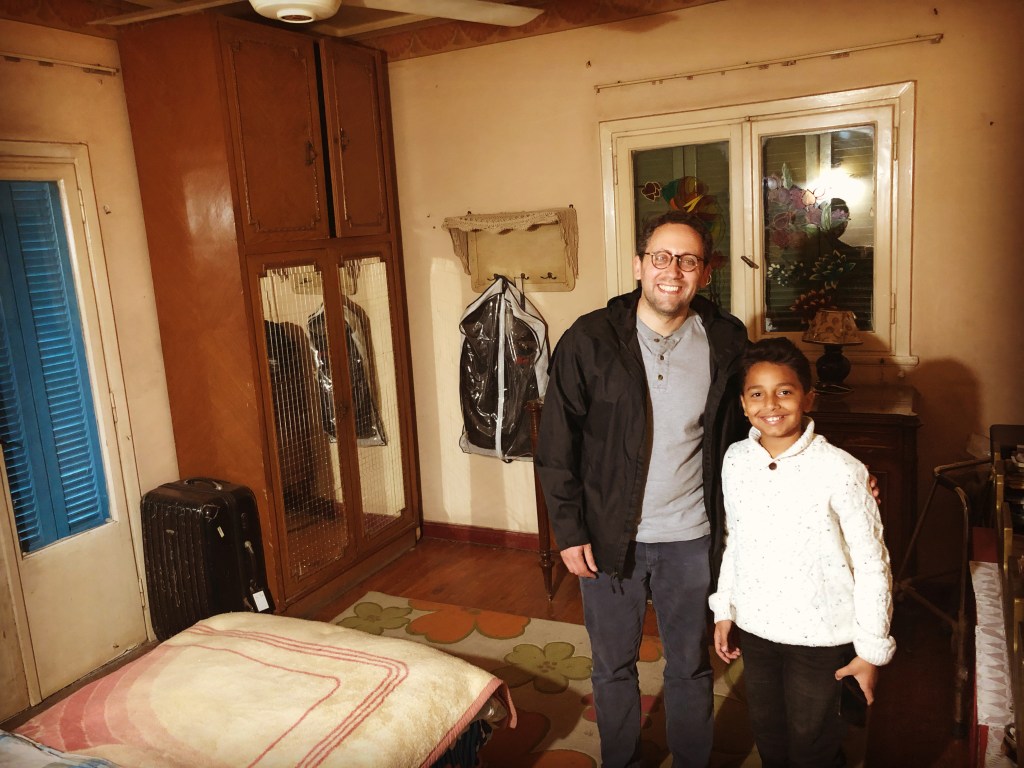
While at Zahra’s apartment, she showed me the room my mom lived in while she was in Heliopolis.
With my youngest brother, Hamza in mom’s old room.
After this visit we were taken to our hotel before we headed back out to have dinner with my father and some of my family members. Here we met one of my father’s two wives, my youngest brothers and sister and some cousins while we feasted on a sumptuous Egyptian dinner of pigeon and lamb.
With (from left to right) two cousins, my brother, Hamza, sister, Sama, brother, Yehia and my father in Heliopolis.
It was a wonderful first evening in Egypt. My friend and I were welcomed and my arrival was treated like a true homecoming.
Day 2 –
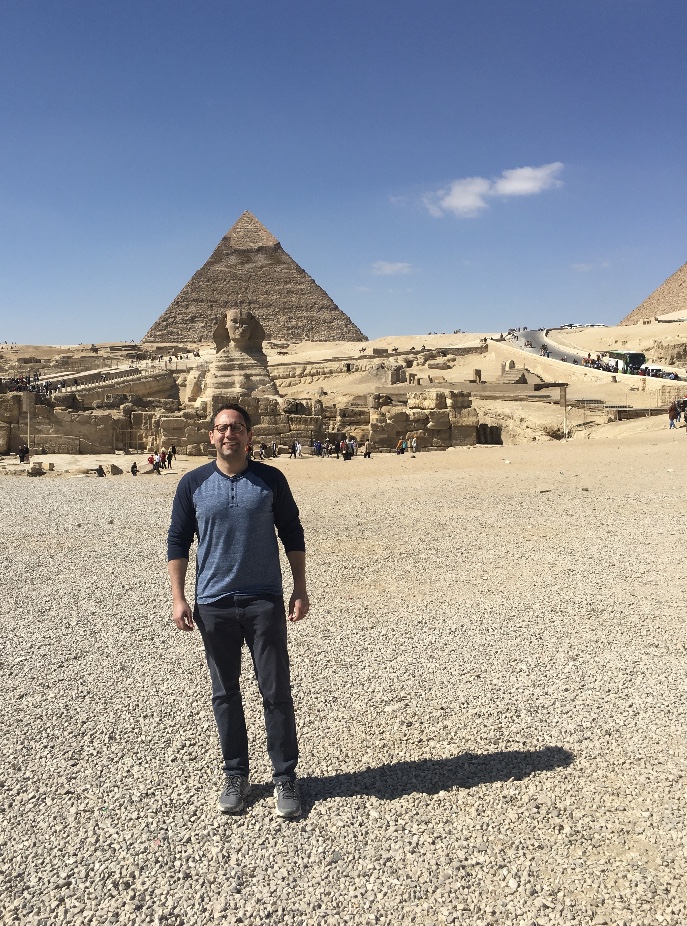
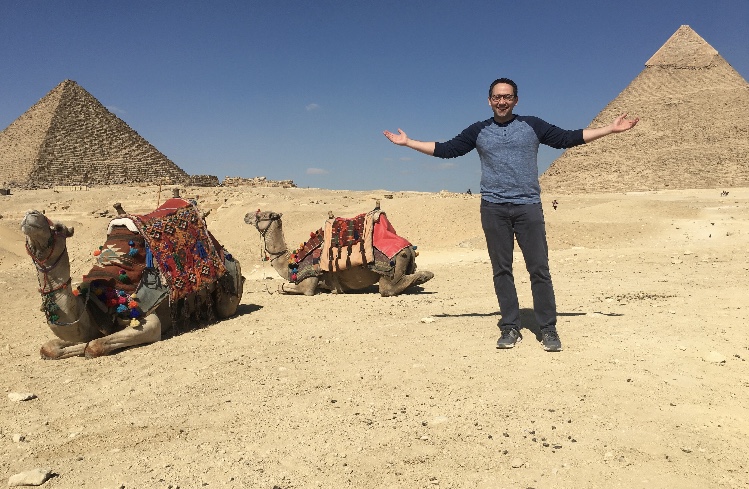
After a good night’s sleep, Adam and I were picked up early from the hotel and taken by guides of my father to the great pyramids of Giza. At Giza, we joined throngs of others in gazing up at the wonder of these towering marvels made thousands of years ago by ancient Egyptian kings and queens. We also saw the great Sphinx and toured the Giza plateau by camelback. It was an incredible experience even if we almost fell off our camels at one point when the two started to tussle with one another!
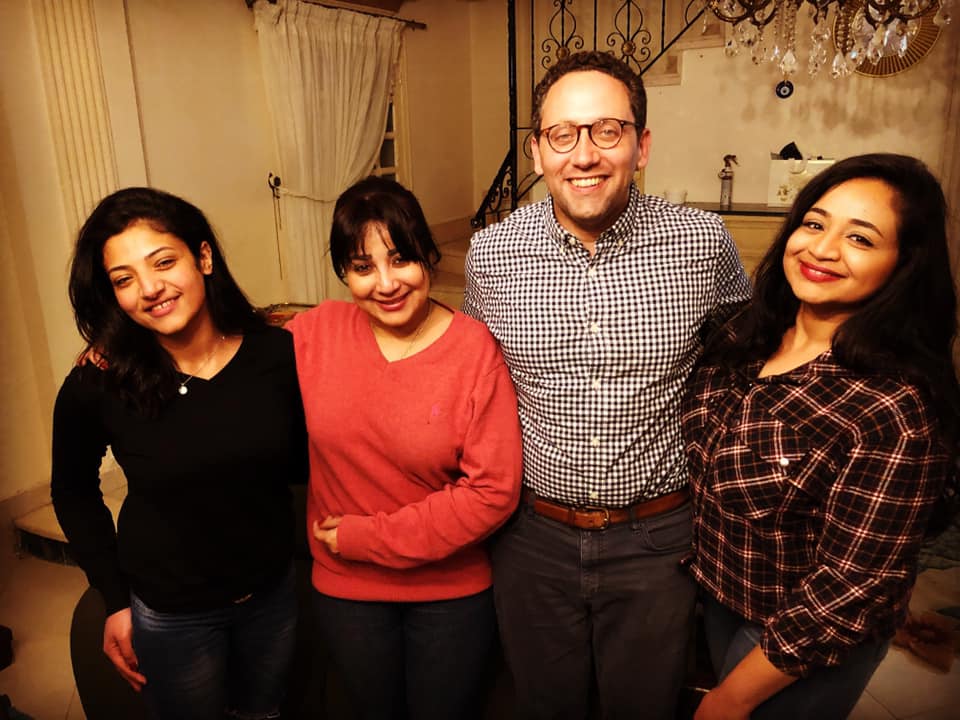
That evening, we dined at the house of my father’s other wife and my three eldest sisters who live in “New Cairo,” a development outside of the downtown area. It was indescribably wonderful to see them together and begin to make a personal connection.
Big brother at home with Nour, Yousra, and Hend.
Day 3 –
We’ve spent today exploring Coptic Cairo and Islamic Cairo, old parts of this ancient city with roots in all three of the Abrahamic faith traditions.
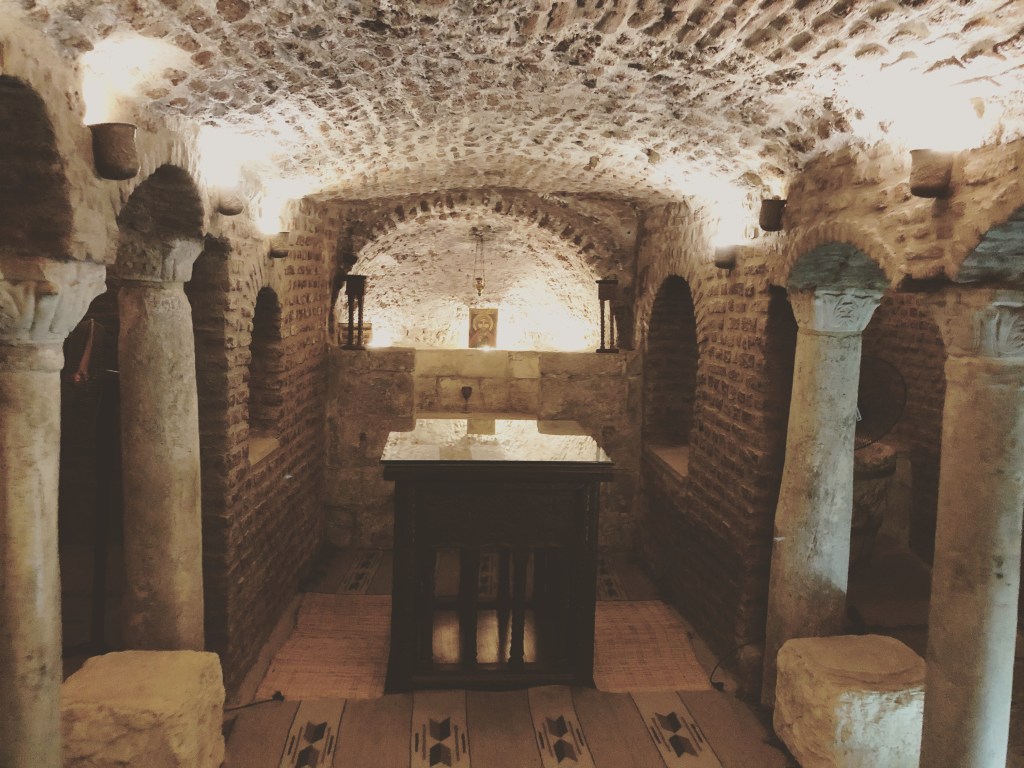
In Coptic Cairo, we started at the Coptic Church of the Holy Family that houses the site where tradition has held that Mary, Joseph, and Jesus took shelter for three months to hide from King Herod’s wrath.
The cave where the Holy Family took shelter from Herod.
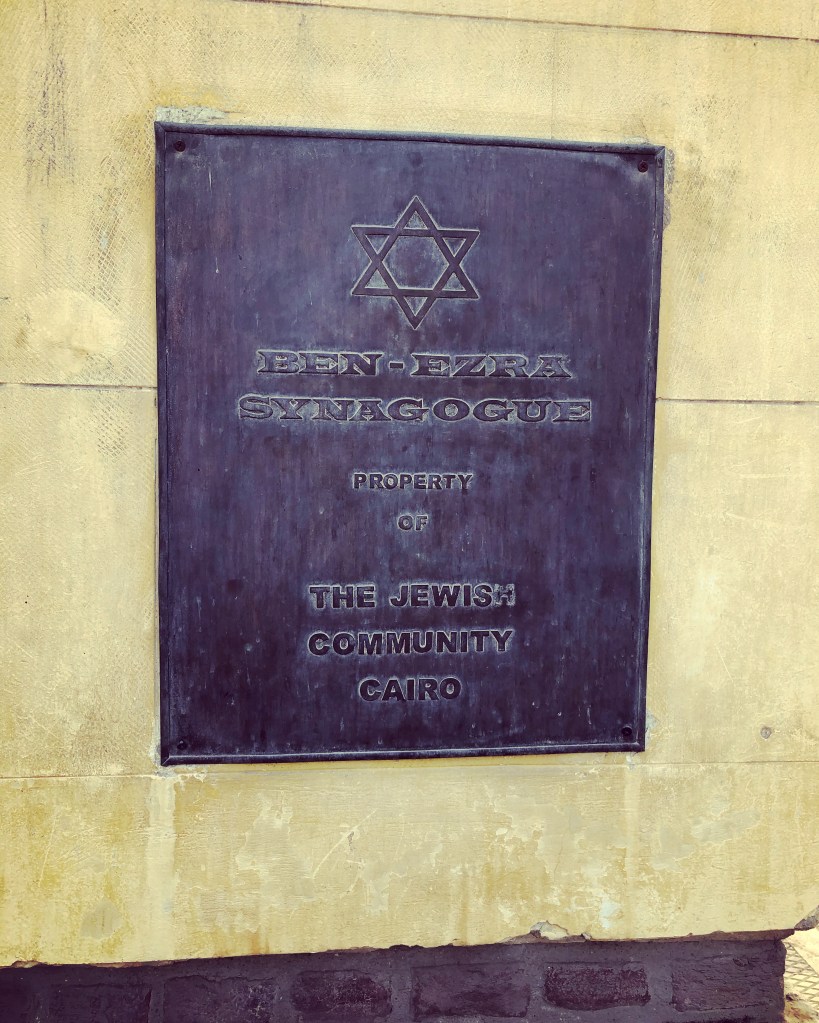
We also visited an old synagogue close by and were told by our guide of an era when all three Abrahamic traditions coexisted peacefully in this same Cairo neighborhood.
While strongest in the Mediterranean city of Alexandria, the Jewish community in Egypt is quite small. We were told that Christians today make up about 19% of the country’s population of approximately 100 million people.
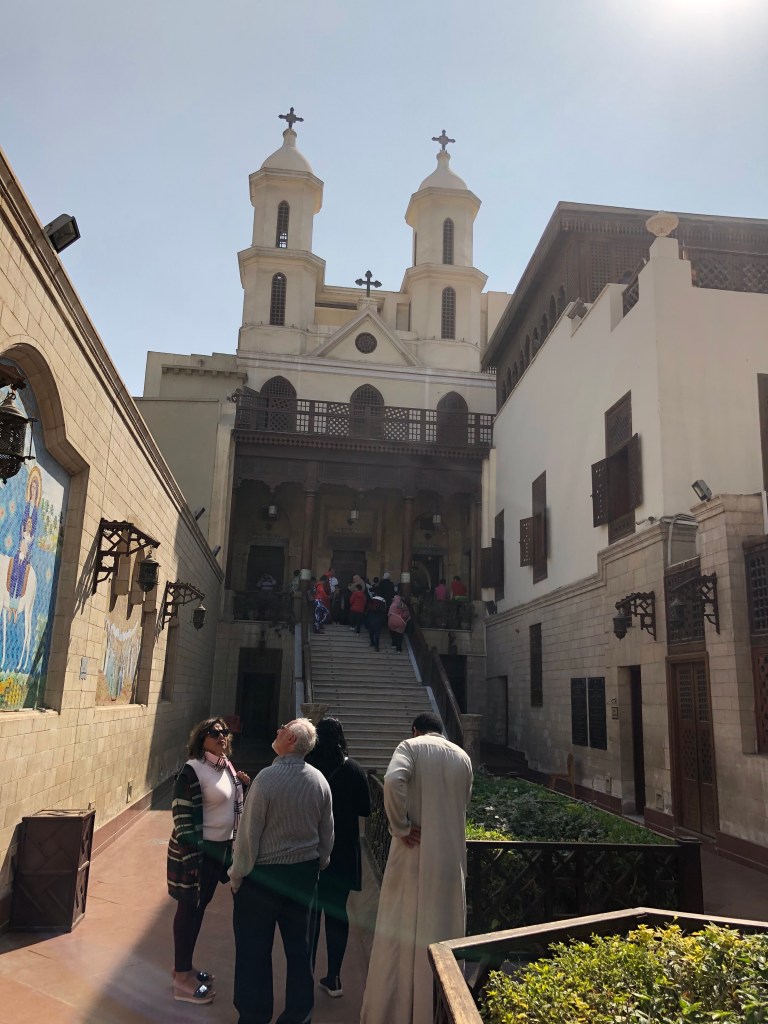
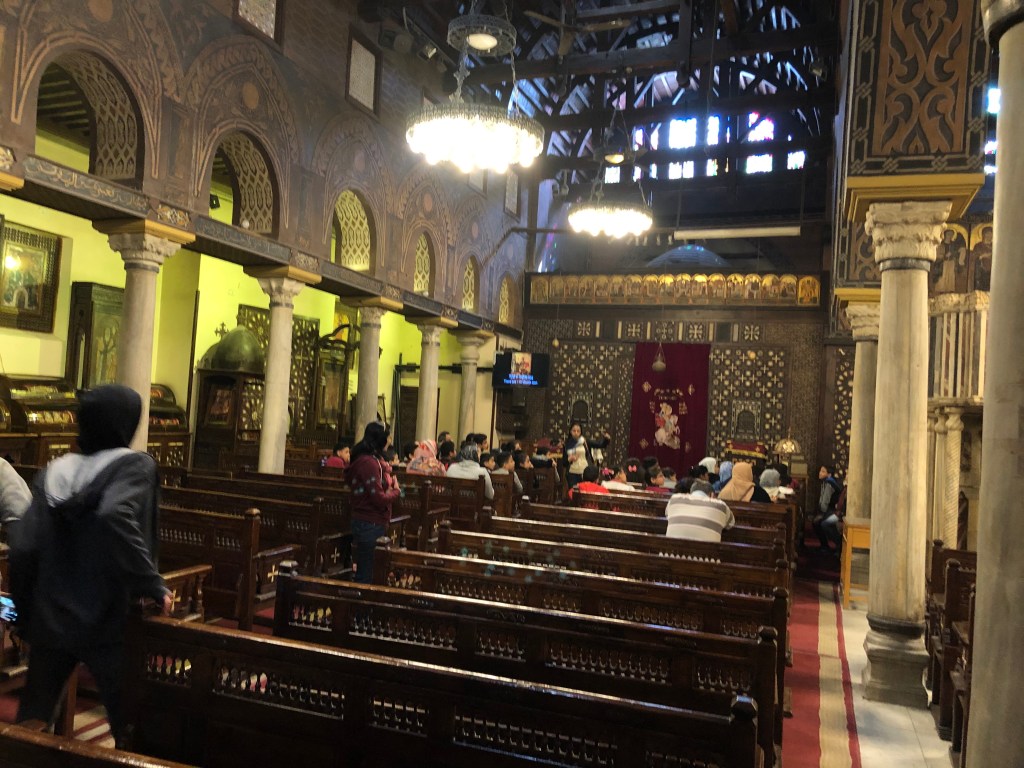
We then toured a fourth century Coptic Church called “the hanging church” because it was built without foundation and elevated off the ground. At one point, this church was a center of Christianity and was used to shelter Christians from persecution prior to Emperor Constantine’s conversion to Christianity.
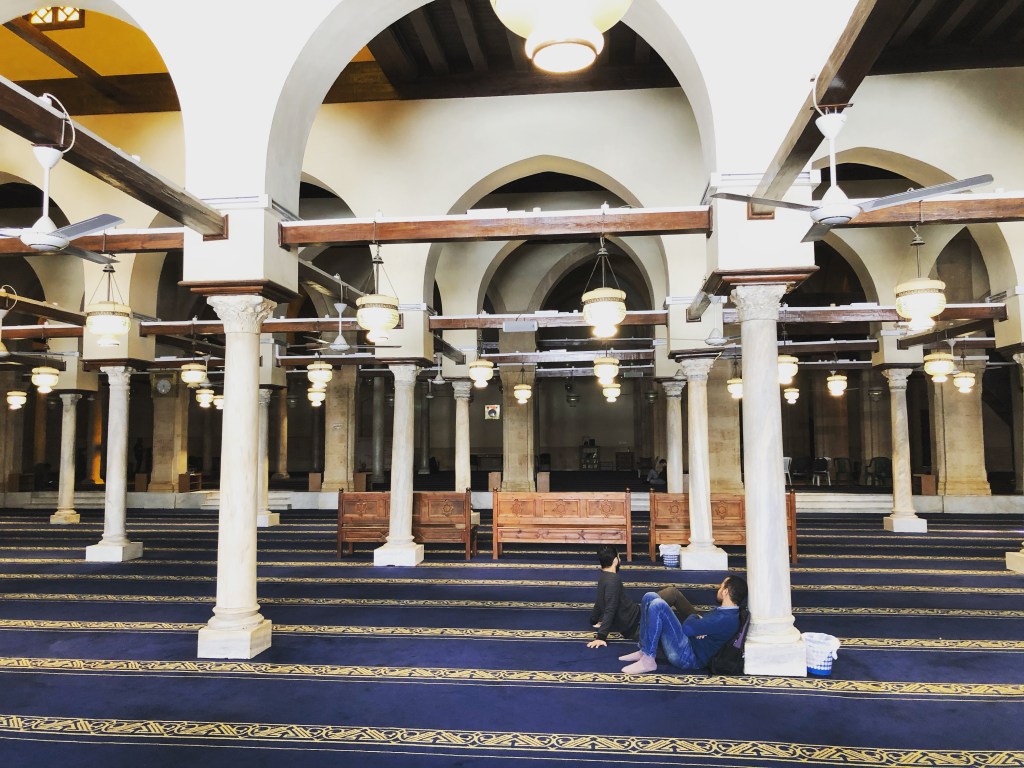
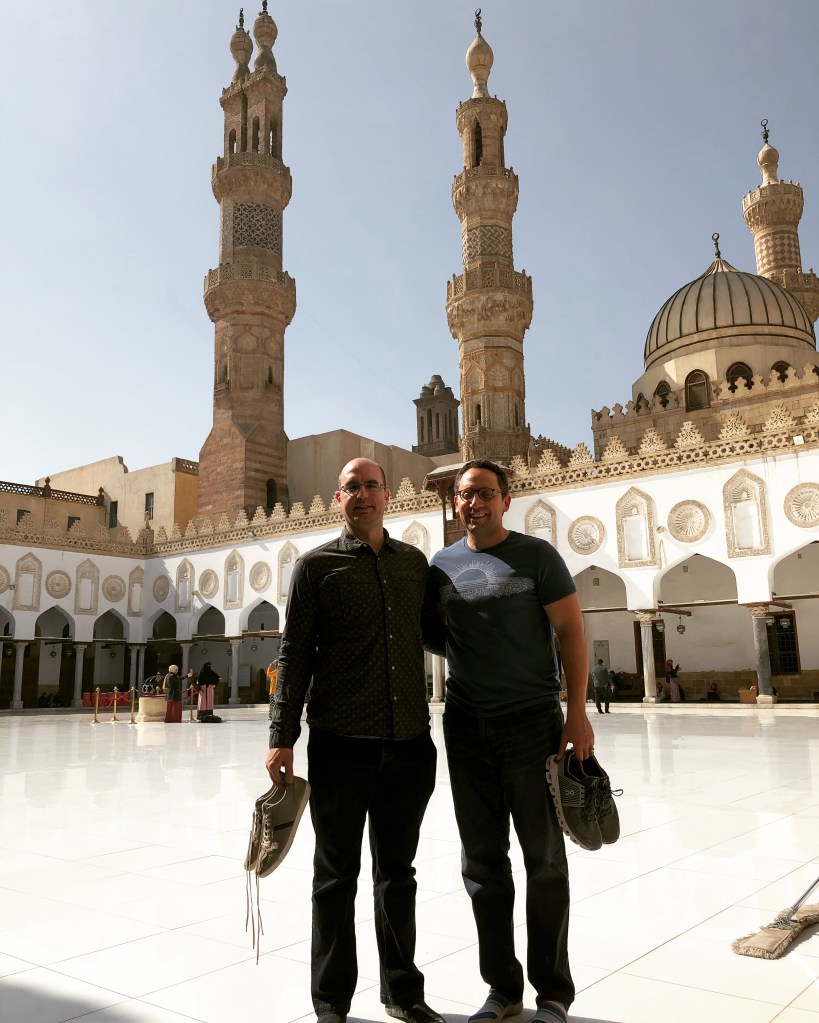
Lastly, we walked the streets of Islamic Cairo, strolling past old markets to the sound of the “adhan,” the hauntingly beautiful Muslim call to prayer. We ended our tour in the famous Al-Azhar Mosque, the center of Islam for the Sunni Muslim world.
The prayer space for men at Al-Azhar facing the direction of Mecca. With my friend, Adam at Al-Azhar on a gorgeous afternoon in Cairo.
Tonight, we head into town for a night out with my family as Thursday here is akin to Friday in the United States. Given the nocturnal rhythm of life in Egypt, we expect to be out a long while.
It’s been a whirlwind of wonderful so far. More later!
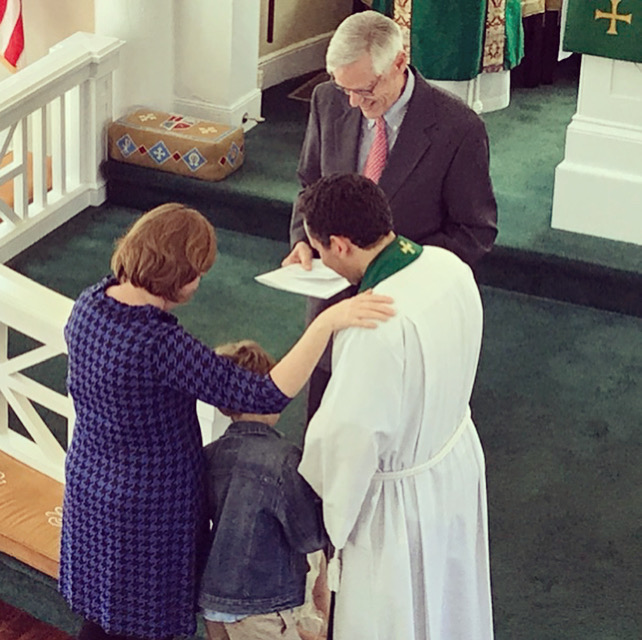
Receiving prayers at church for my travel and for our family while I am away in Egypt.
Fresh from a wonderful send off at church, where my family received cards from St. Stephen’s parishioners and were prayed over at the end of worship by Bishop Charlie vonRonsenberg, I now sit at the airport in Atlanta awaiting my flight to Rome.
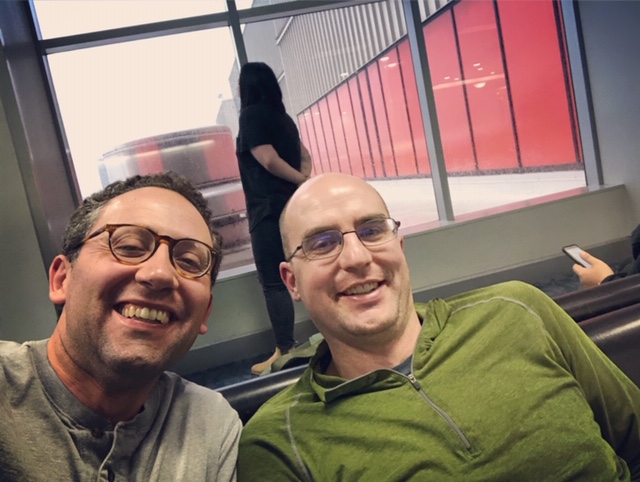
My traveling companion, Adam, flew in shortly after I arrived and we found each other in the international terminal. So, the first part of this pilgrimage can officially be declared a success! It is a cold and rainy evening here in north Georgia but that does not appear to be effecting our departure.
The two Adams ready for our adventure!
I have always loved to travel not only because of the anticipated destination but also because of the liminal space of airports. While writing this post, I am surrounded by a diverse melange of people coming and going from every destination imaginable. Perhaps, there are others around me on a similar journey preparing to rendezvous with family for the first time? There is just something about the path that is almost as exciting as the end point. As we depart, I am reminded of Psalm 84:5: “Blessed are those … whose hearts are set on pilgrimage.”
In beginning this long anticipated adventure and boarding my flight to Rome en route to Cairo, I find myself reflecting upon a quote by the French philosopher, Simone Weil that was shared by a member of my church. Weil writes, “To be rooted is perhaps the most important and least recognized need of the human soul. It is one of the hardest to define. A human being has roots by virtue of our real, active and natural participation in the life of a community which preserves in living shape certain particular treasures of the past and certain particular expectations for the future. This participation is a natural one, in the sense that it is automatically brought about by place, conditions of birth, profession and social surroundings. Every human being needs to have multiple roots. It is necessary for us to draw well-nigh the whole of our moral, intellectual and spiritual life by way of the environment of which we form a natural part.”
It is finally time for me to dig deep into the soil and tend the roots planted by my mother decades ago. It is time to explore and learn about them not only to preserve treasures of the past but to continue to shape my “moral, intellectual, and spiritual life” well into the future.
Who knows what the days hold but I look forward to this pilgrimage! Thanks for following along.
As the day of my departure draws near, I am finally beginning to get at least some semblance of a plan for my time in Egypt.
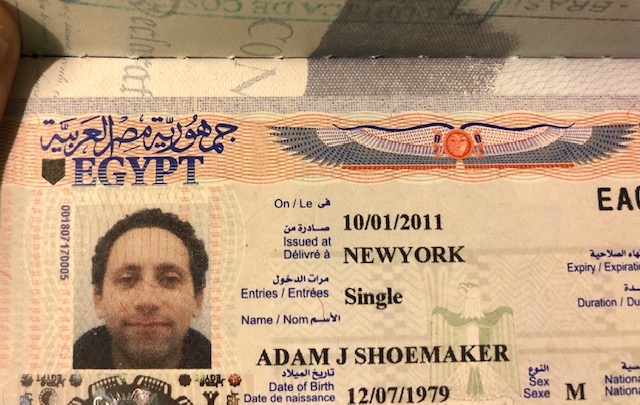
My old Egyptian Visa from the trip that was canceled due to the 2011 revolution that overthrew Hosni Mubarak
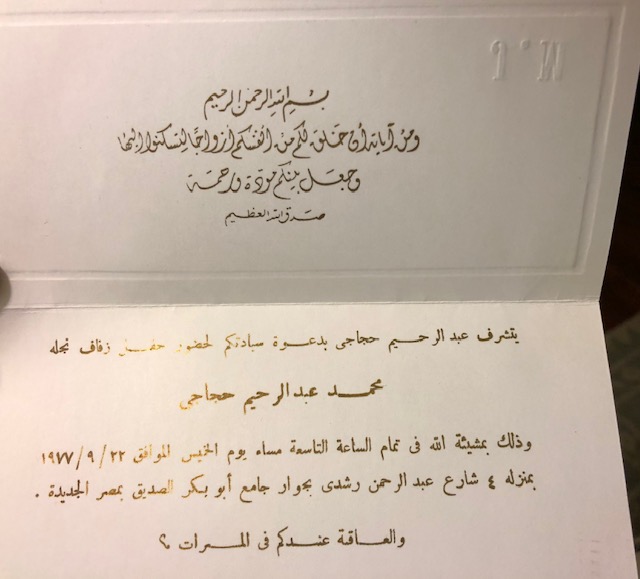
After we arrive from Rome on Tuesday, February 11th, the first several days will be spent in Cairo and specifically, as I noted in my last post, in the affluent neighborhood of Heliopolis where many of my family members live. In reviewing the packet of letters and other correspondence my mother maintained during her years in Egypt, I noticed that it was in fact in Heliopolis where she married my biological father at the home of my paternal grandfather on the evening of September 22nd, 1977.
My parents’s wedding invitation. The top portion is a verse from the Quran that reads: “From the wisdom of God, he made for yourselves wives to live with, and he made from you love and compassion.”
While in Cairo, I have a sense that there will be some large dinners and other social events for family to come and meet me. My father has asked me to bring a suit and be ready for some formality. After forty years, I’m fairly certain my reception will be akin to the wholehearted embrace of the prodigal son in the beloved parable from the fifteenth chapter of the Gospel of Luke.
Then, on Friday morning, February 14th, I’ll plan to accompany my Lutheran pastor friend, Adam to St. Andrew’s United Church of Cairo where he once interned and has been invited to preach.
St. Andrew’s is an interdenominational ministry, founded in 1908, with an impactful mission for refugees from other African countries, located in downtown Cairo not far from Tahrir Square. Weekly worship is Friday at 10am reflective of the fact that churches in Egypt follow the Muslim rhythm of Friday prayers.
That afternoon, at 4pm, we’ll fly out of Cairo on an Egypt Air flight and head south to begin several days in the city of Luxor.
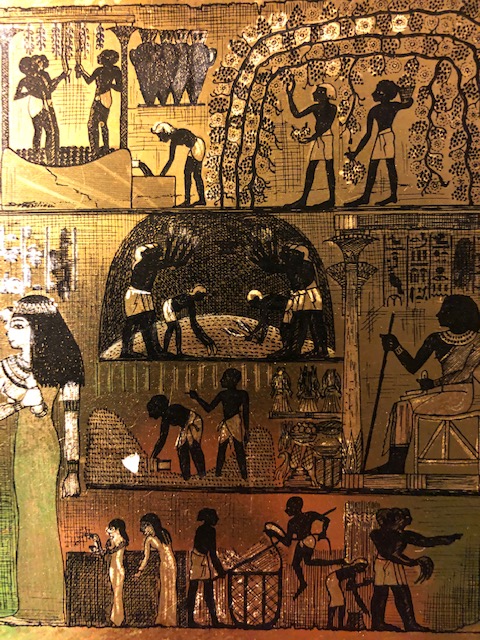
An image of the Queen’s Valley in Luxor that I found amid my mother’s correspondence from her years in Upper Egypt
As previously noted, this city, that was once ancient Thebes and the capital of the country thousands of years ago, is the ancestral home of my family, the Haggagis (my sister, Yousra, has referred to it as “my home town” in messages to me). This is where my mother lived with my father for most of her years in Egypt.
Luxor Temple
Thus, my days in Luxor will be spent exploring both the history of ancient Egypt and that of my family. There’ll be trips to celebrated sites such as the Valley of the Kings and Karnak as well as time with relatives cruising along the Nile.
A recent photo of my father on a Nile cruise liner owned by the Haggagi family
I’ll also want to see some of my parent’s old hang outs like the Etap hotel that my mother references in many of her letters home.
We’ll return to Cairo briefly before departing the country on February 20th for an early morning flight to Rome.
Much is still unknown and, admittedly, many of these details could change (see “we make plans and God laughs”). But, as I finish my preparations to travel and pick up the last of the gifts I plan to bring with me, this skeletal itinerary is helpful.
Now, back to packing!
Another image hidden in my mother’s correspondence from her year’s in Egypt
My long-awaited pilgrimage to Egypt is now less than two weeks away and I increasingly find it hard to think about anything else.
The plan is to meet my travel companion (a Lutheran pastor friend, also named Adam, who worked for a year in Egypt) at Hartsfield-Jackson International Airport in Atlanta on February 10th.
My travel buddy, Adam with my son Malcolm
On the evening of the 10th, we’ll fly to Rome. After a layover in the “Eternal City,” we will journey on to Cairo and “inshallah” (“if God wills it”.in Arabic) be on the ground around 4:30pm local time. From there, we’ll head to our hotel in Heliopolis, an affluent neighborhood where my family lives.
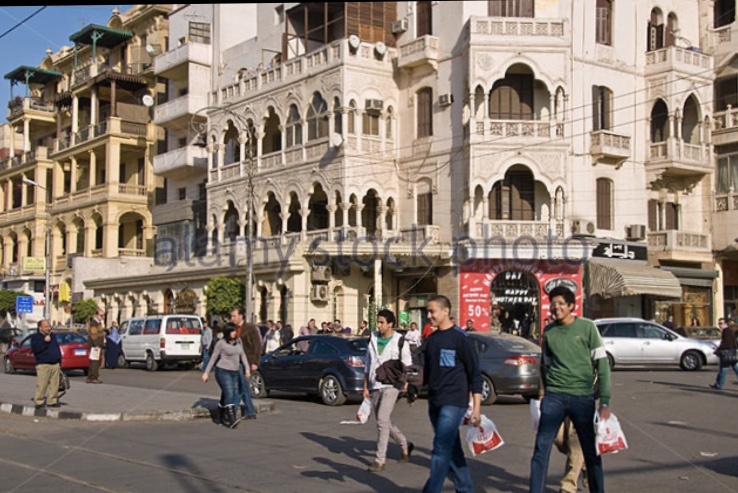
Modern day Heliopolis
I have spent an awful lot of time wondering how I’ll feel when my feet are planted on Egyptian soil for the first time. While I have lived my entire life a world away, Egypt has often been on my heart and mind. One thing’s for sure is that the moment my biological father sees me walk out of the arrival gate at Cairo International Airport, it will be the fulfillment of a hope he has had for forty years.
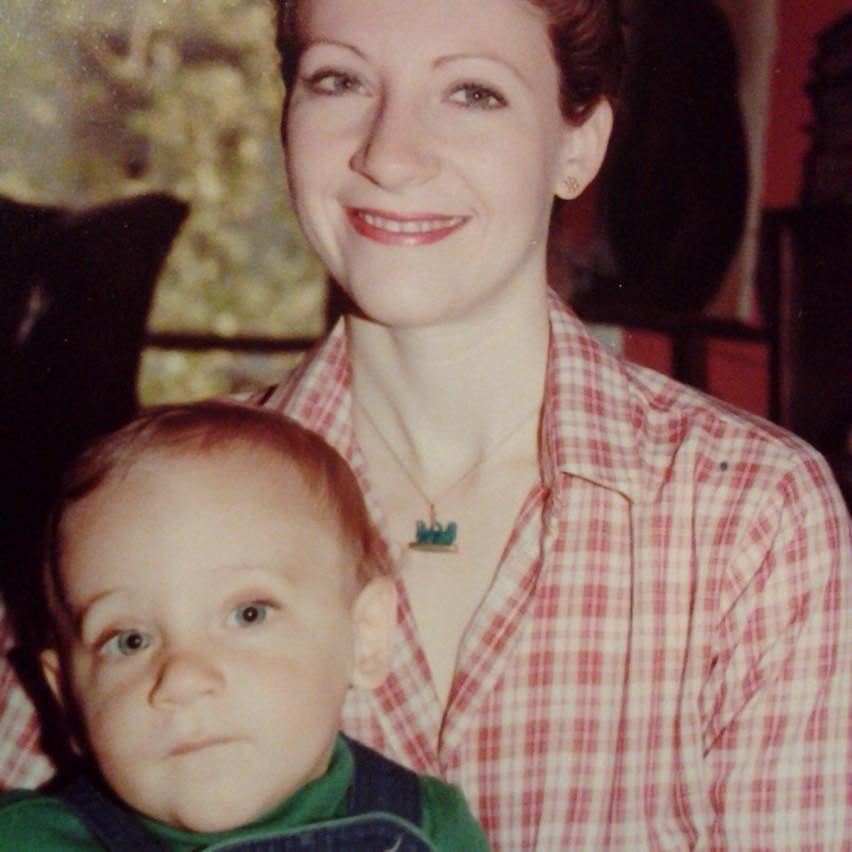
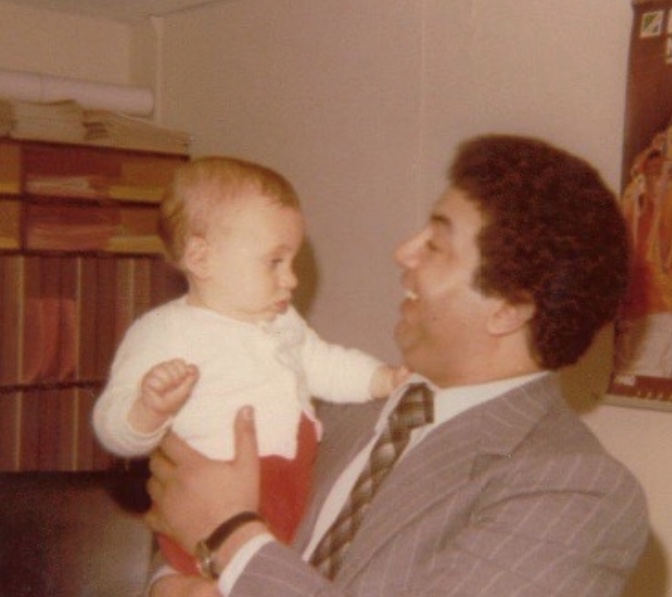
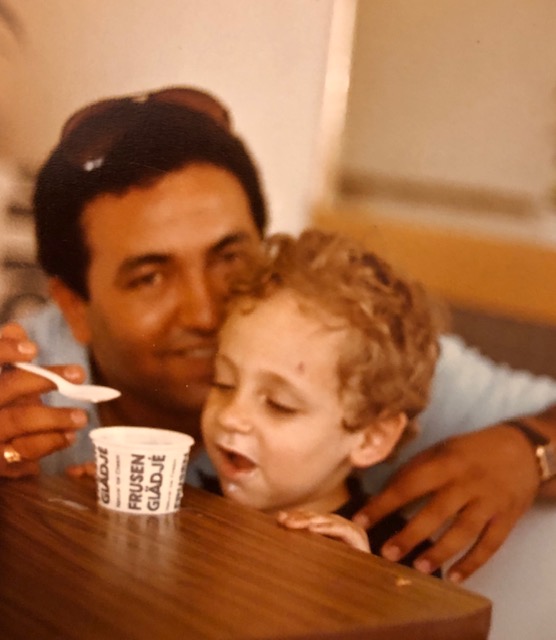
Me and Hamada in NYC around 1980
As I peruse a number of books about Egypt in preparation for my time away, I am reminded how different the goal of this trip is from that of a typical tourist. I am proud to have roots in a country with such a rich history and am eager to learn about that patrimony. This is, after all, the land of the great pyramids of Giza. It is the ancient civilization that introduced the world to the 365-day calendar and 24-hour clock. It is the sacred ground that was once home to the likes of the boy king, Tutankhamen, Queen Nefertiti and also, for a short while, the Greek conqueror, Alexander the Great.
Ancient doppelganger? A portrait of a young Egyptian man around the time Alexander the Great invaded Egypt alongside a picture of me at 17.
Egypt’s 5,000 years of recorded history is breathtaking to consider and yet, the history I am most eager to learn about is far more immediate than that.
My family in Egypt, as I noted in an earlier post, hails from the Upper Egyptian city of Luxor.
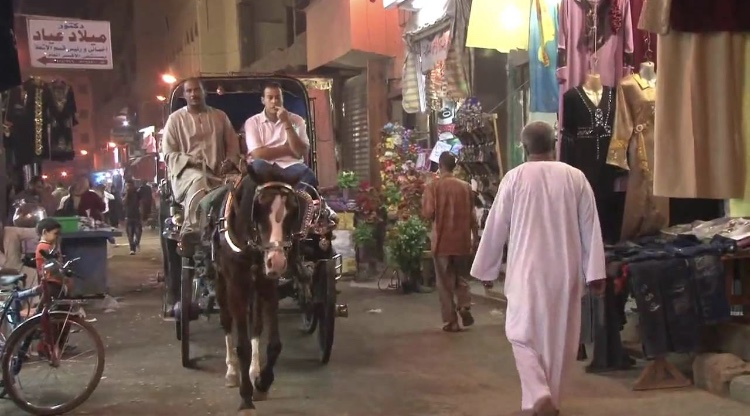
A typical market in Luxor
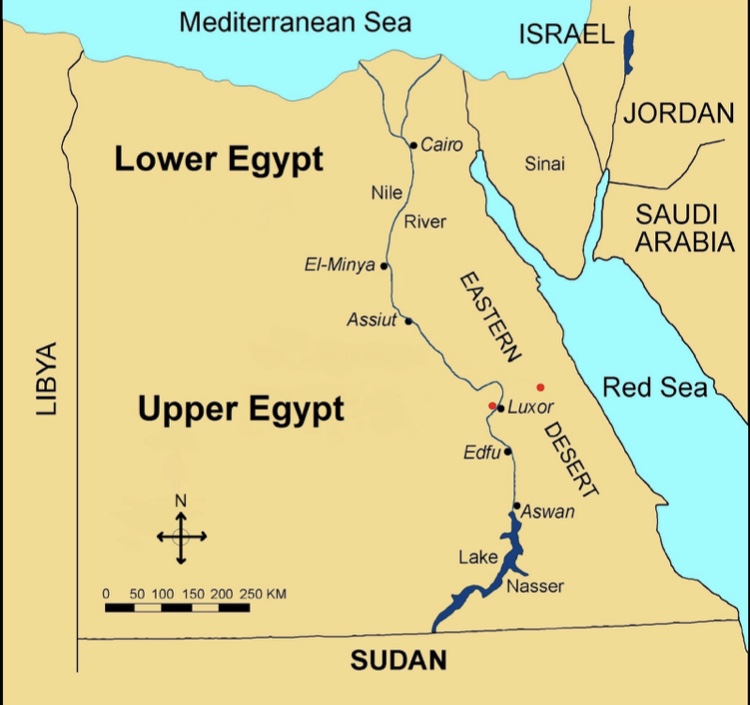
The territory of the country south of Cairo stretching all the way to the Sudanese border has, since ancient times, been referred to as “Upper Egypt” because of the flow of the famed Nile River.
In general, this part of the country takes a back seat to the Lower Egyptian capital city of Cairo in just about everything. According to the author, Max Rodenbeck, “In impoverished Upper Egypt, the literacy rate is only half of Cairo’s. There are no Egyptian daily newspapers outside Cairo, and the score of dailies [in the capital city] … devote scant space on their innermost pages to all that happens elsewhere in the country.” Although Luxor was once the center of ancient Egypt and is home to the famed Valley of the Kings, the Egyptians of modern day Luxor are often stigmatized and looked down upon. It is quite impressive then that my family – the Haggagis – have climbed the economic and social ladder over the years and, by all accounts, enjoy an affluent standard of living today. The family money has come through tourism.
Evidence exists that it was my paternal grandfather, Abdel Rahim, and his brothers who were the ones to begin the family travel business. They apparently began work as guides for the colonial British government.
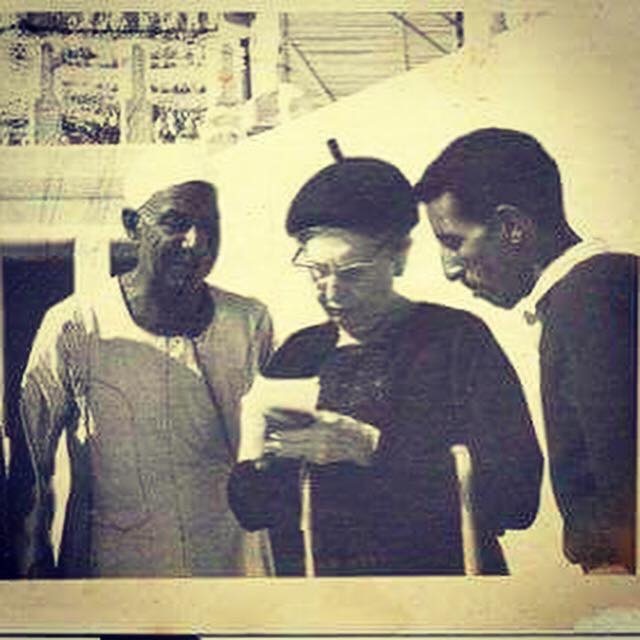
My great uncle, on the right, peering over the shoulder of the late Queen Elizabeth (the Queen Mother) while she toured the Valley of the Kings
My grandfather began a travel business in Luxor and, eventually, in the far more prosperous city of Cairo. He would keep an apartment in the up and coming neighborhood of Heliopolis until the day he died.
Heliopolis, meaning “city of the sun,” is both the name of a vitally important ancient city now in ruins and the more modern neighborhood, about a mile from the ancient site, founded in the early twentieth-century. My mother’s letters reference time she lived there, in addition to Luxor, while married to my father. While it is clear I have family spread out all over the country, all my immediate family currently reside in Heliopolis.
I will be in the country for nearly two weeks but still do not have much of a plan. My eldest sister, Yousra tells me Egyptians are not much into plans or schedules. She says the family just wants to see me and wants me to have an enjoyable experience. The goal at the end of the day is to meet them and, in many respects, to retrace the steps my mom took as an idealistic and adventurous young woman in her early twenties.
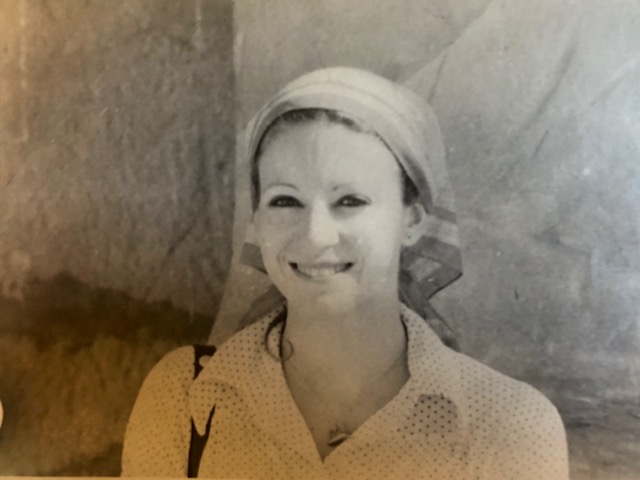
My mother while leading tours of the ancient pyramids and tombs of Upper Egypt
While ancient Egypt and its great history are compelling, this trip is more focused on establishing present day connections with my large extended family that might help me construct a new chapter I can continue to live into for the rest of my life.
The recent wedding of my cousin Abdel Rahim to his wife, Hiba in the Red Sea resort of Sharm el-Sheikh
My eldest sister, Yousra, stayed in touch with me during my father’s imprisonment and provided updates whenever possible. For all its drawbacks, social media enabled us to do that and has aided me in maintaining some meaningful contact with other family members in Egypt over the last several years. In time, my father was released but the political situation in the country remained unsettled and violence continued.
That violence erupted when the Coptic Church, a small but sizable minority in Egypt and one of the oldest Christian traditions in the world, was victimized. Saint Mark’s Coptic Orthodox Cathedral, the principal church in Alexandria and seat of the Coptic papacy was suicide-bombed on Palm Sunday of April 9th, 2017. On the same day, another Coptic Church, St. George’s in the northern Egyptian city of Tanta was also suicide-bombed.
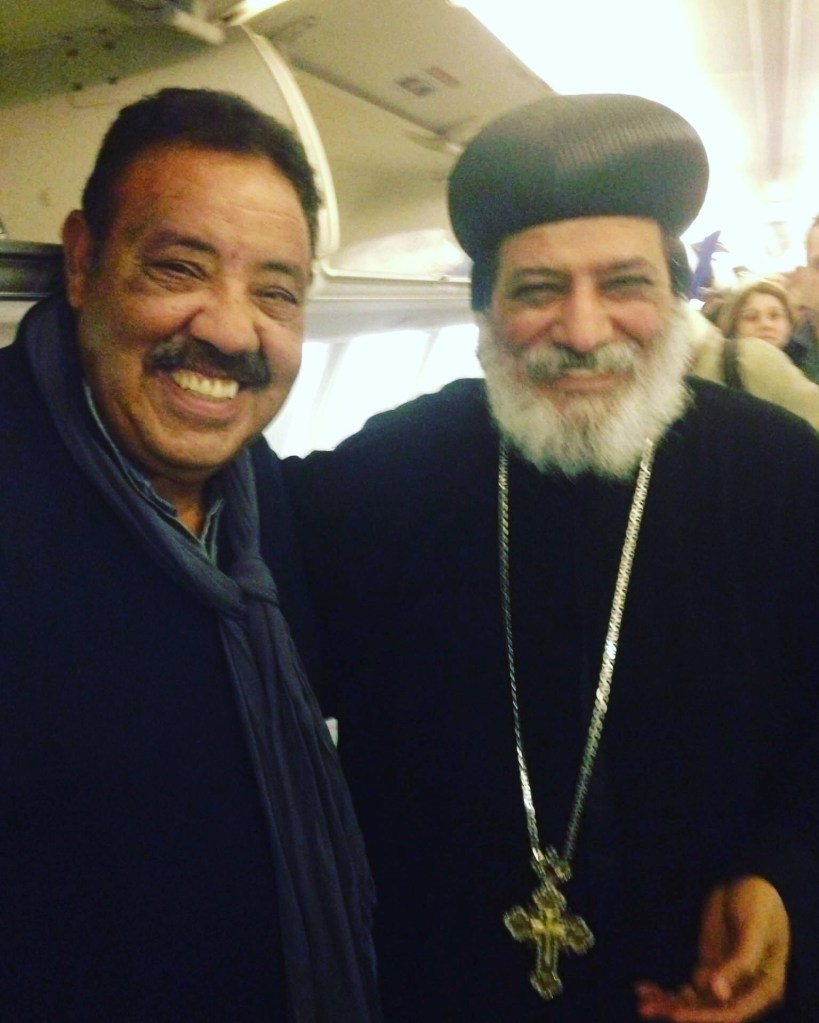
Although the twin bombings were all over the news, I again received an encouraging sign from my family when I noticed an image posted on Facebook, days after those attacks, of my uncle Ramadan, a faithful Muslim, embracing a Coptic priest.
The image, and others like it shared by my Egyptian family, served as a welcome reminder that this is the true face of Egypt. Beyond the headlines, beyond the attempts of extremist voices to sow hatred and discord, Egyptians of good will, of all faiths and backgrounds, in towns and cities across the country, are working and living alongside one another in the warm and gregarious spirit typical of the Egyptian heart and soul.
As the situation in Egypt stabilized, my family began to encourage me to attempt to make another trip and yet, the thought of a new attempt still made me somewhat uneasy. I was now the father of three small children. Life was full and busy and this trip seemed like a lot to take on. I could intellectually see the images shared by my family or hear that Egypt’s security situation had improved but, like many Americans (who have not exactly been flocking to Egypt in recent years), I still found it hard to look past our country’s characterizations of the Middle East and trust that it was a good time to go.
Then I tuned into the 2018 World Cup.
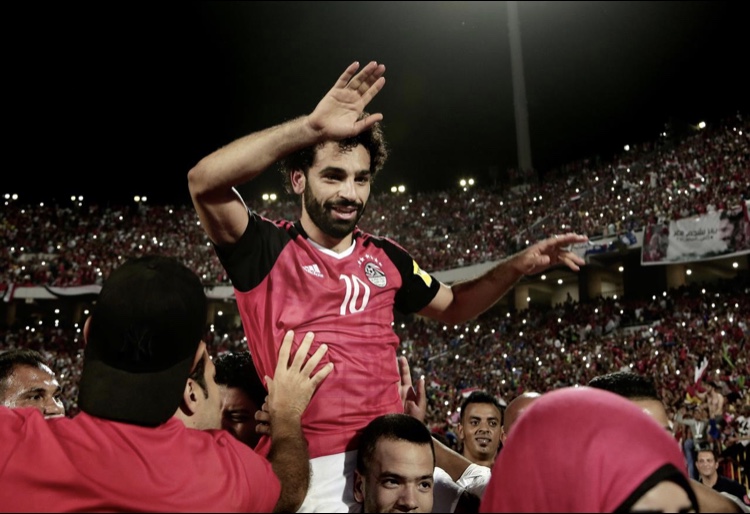
The American team had failed to qualify that year but the Egyptian Pharaohs had made it for the first time in nearly thirty years when their fleet footed star striker, 27 year-old Mohamed Salah scored on a dramatic 95thminute penalty kick against the Democratic Republic of Congo in an African qualifying tournament on Egyptian soil. When Salah, the so-called “Egyptian King,” scored that goal off his powerful left foot, the entire country went wild.
It was, as some recall, a healing moment across Egypt after the political turmoil of recent years.
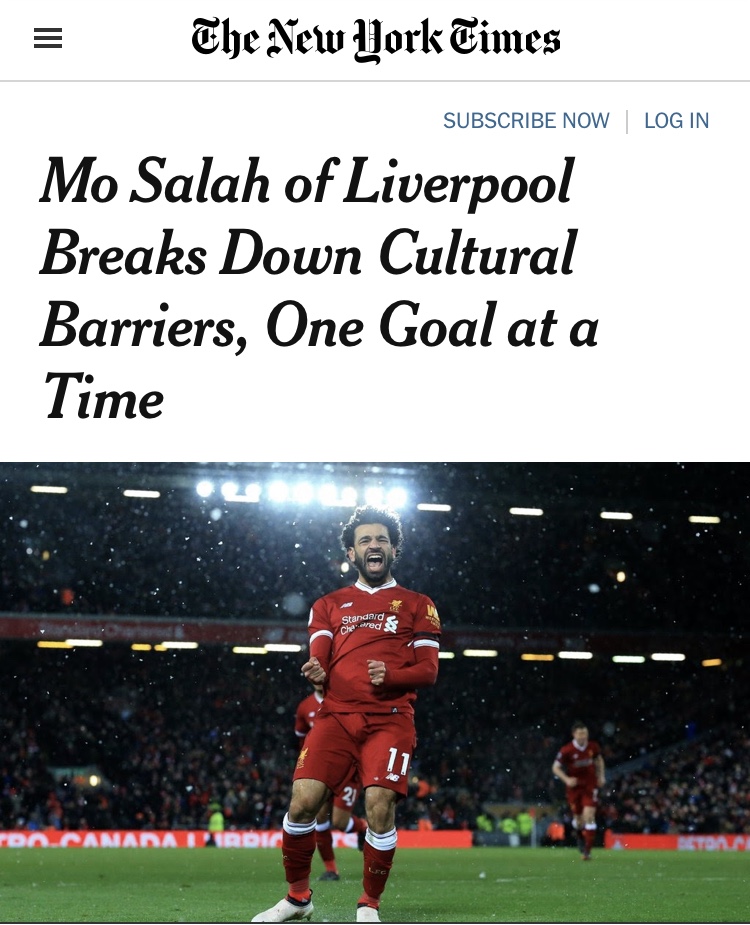
Representation is a powerful thing. To see an Egyptian elevated on the world stage filled me with a sense of ethnic pride. I had always been a sports fan but realized that this was the first time in my life an Egyptian was looked upon as one of the best athletes in the world. Here was an ambassador for Egypt and Egyptians who was telegenic, warm, and kind to fans of all stripes not to mention enormously generous to the small impoverished village of Nagrig, where he was born.
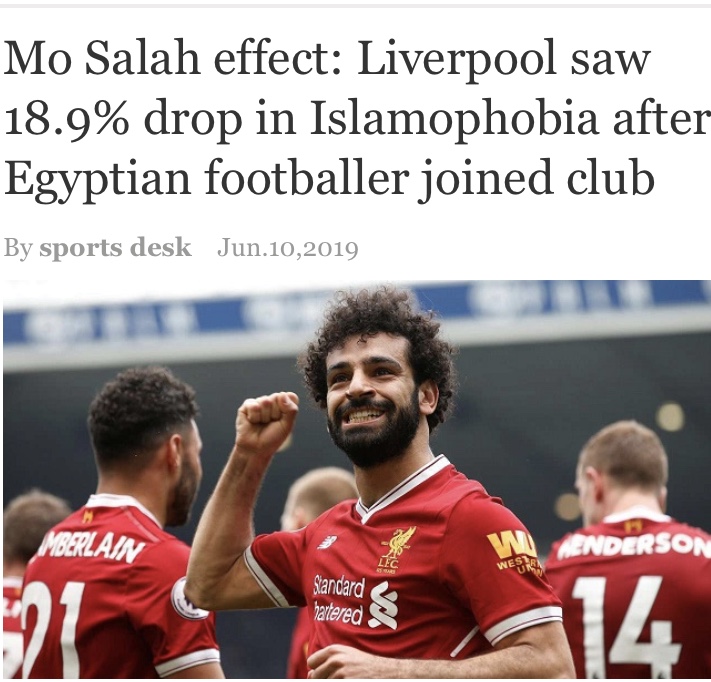
He is also, at this critical moment in history, one of the most public faces of Islam on the planet. And this, according to many statisticians, is making an impact.
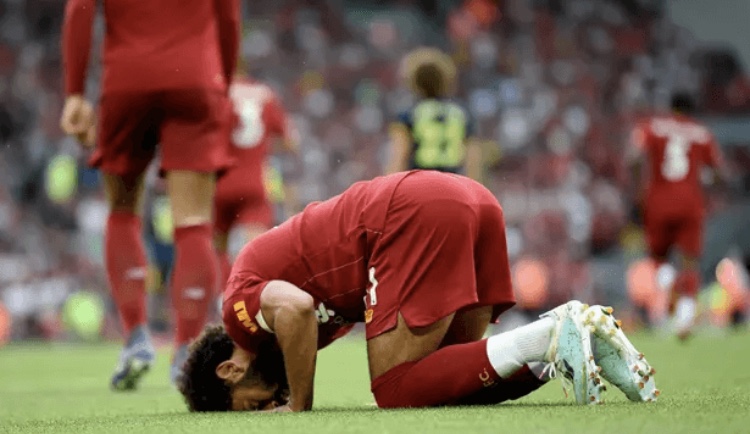
Salah in prayer after another goal
The so-called “Mo Salah effect” refers to the documented drop in Islamphobia and hate crimes in Liverpool England, where Salah is a star player for the city’s powerhouse British Premier League team.
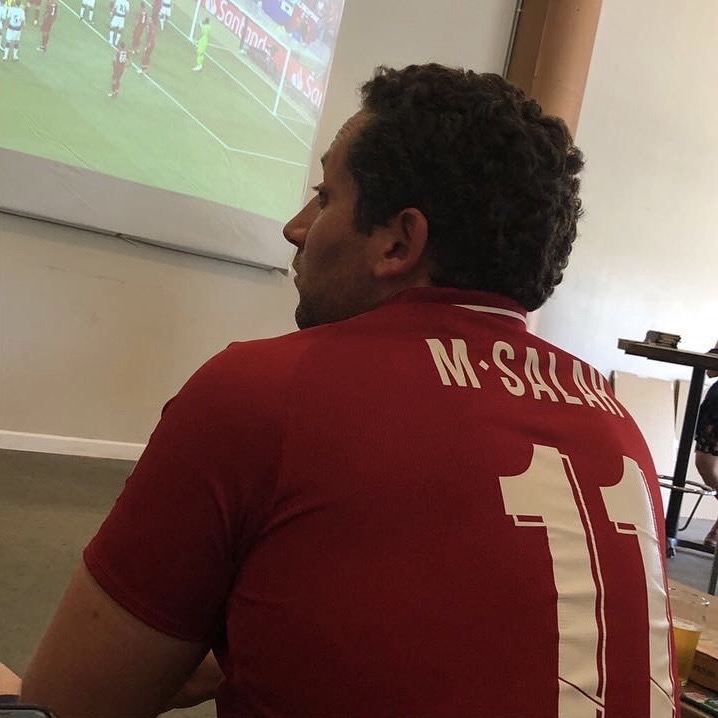
The moment the World Cup ended, I was hooked. I purchased a Salah Liverpool jersey and started to follow his club team.
Carefully watching Liverpool play in last year’s Champions League Final
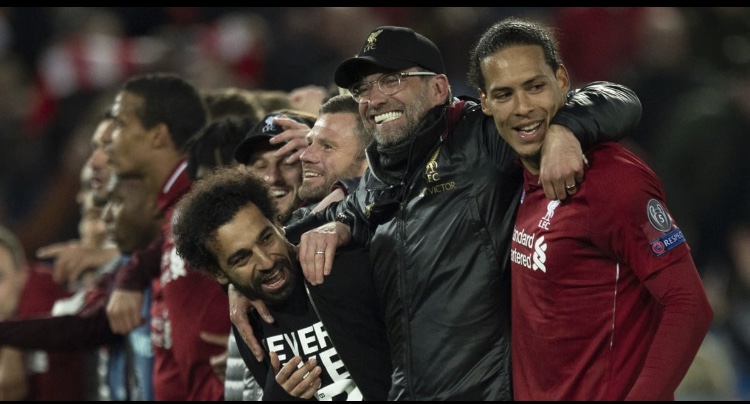
I have often believed in the religious and spiritual dimensions of sports. Stadiums can be their own kind of cathedrals and draw disparate people together under a common cause. In the case of a global sport like soccer, it can also break down walls that so often separate us as human beings. A team like Liverpool, for instance, has a German coach in the charismatic Jurgen Klopp and starting players from England, Brazil, the Netherlands, and the continent of Africa. It’s a beautiful thing to watch their camaraderie on and off the pitch.
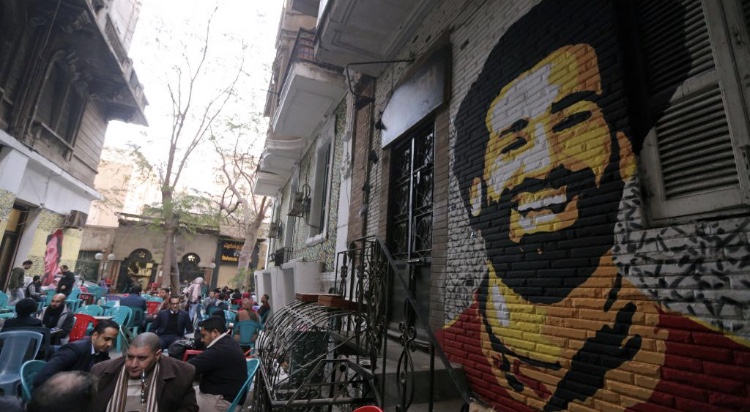
Supporting Liverpool over the past couple of years has also been another way to connect with my family from afar. In Egypt (and across the Middle East for that matter), Salah is an icon. Egyptian street art can be found all over the streets of Cairo.
Salah’s visage outside a Cairo cafe
To cheer for Liverpool is simply what a good Egyptian sports fan does!
When Egypt recently hosted the African Cup of Nations tournament, my family was there cheering Salah and the rest of the team on.
My sister, Yousra (in a Salah jersey) and a cousin at Cairo International Stadium
Mo Salah has certainly had an effect on me. I was ready again to try to make this trip to Egypt to see my family, the country, and maybe a little Salah street art too. The preparations for this impending February trip will be the subject of my next post.
My mother told me before she died that her biggest regret in not taking me to Egypt was that I never got to meet my paternal grandmother, Sania.
The name “Sania,” means brilliant in Arabic and it is clear that my mother found that a suitable title for a woman she fondly remembered as a faithful and devoted Muslim with a kind and generous heart. As I began to pursue a religious vocation, my mother remarked that, if there is a gene for faith, I must have taken after my Egyptian grandmother.
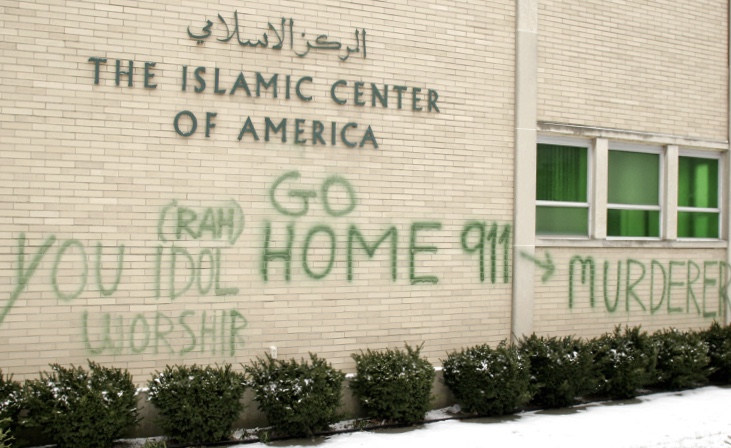
I could not help but think of Sania, and the rest of my Muslim relatives in Egypt, when I witnessed the harassment of Arabs and other Muslim people, living in the United States, in the wake of the 9/11 terrorist attacks.
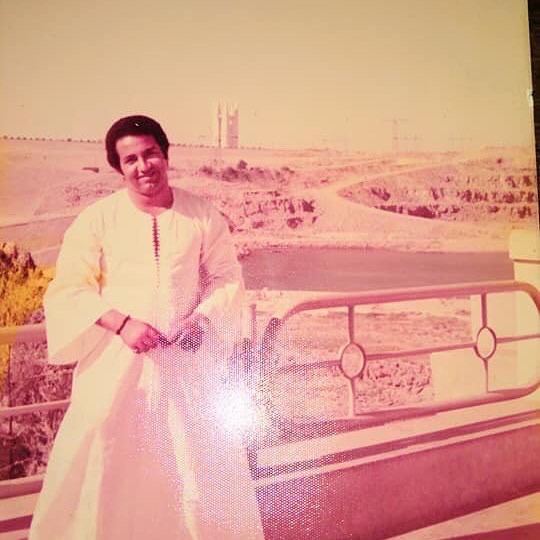
My biological father making his pilgrimage to Mecca in 1976
These devastating attacks were a defining moment for my emerging sense of self. I am part of a generation that came of age on that dark day. As an American and native New Yorker, the loss suffered by those attacks was incalculable. And yet, I could not help but notice the violence that followed not only in the unending war begun in the Middle East but in what began to occur on the streets of our own towns and cities with increased frequency.
In the days and weeks that followed, the image of American Arabs and Muslims boarding buses and subways with small American flags in their backpacks, in order to prove fidelity to the country and avoid retribution, was one I have never forgotten. Amid that climate of fear, I remember thinking to myself, “that could be me.” The only reason I escaped that same prejudice was that I happened to be born with lighter skin tone than Americans typically associate with Arabs. I am also well aware that had I not legally changed my name from Haggagi to the far more innocuous, Shoemaker, in a post-9/11 world, I would continue to be subject to scrutiny each and every time I tried to board an airplane. My features and name, that don’t tell the whole story of my identity, shield me from a great deal of burdens others with a similar background have to bear each and every day.
The shock of 9/11, coming just a year after my mother’s untimely death, spurred me to wake up and continue to struggle with my conflicted sense of self. The darkness of those early days of the 21st-century, while upending, ultimately pushed me towards the light. In the years that followed, study at Harvard Divinity School and a year of work abroad in a “favela” on the western outskirts of Rio de Janeiro, would help me to begin to embrace the diversity of my life’s story. The interfaith setting of a divinity school as well as life in a country such as Brazil, that is just as racially mixed as Egypt, left indelible marks that continue to inform my Christian identity and practice of ministry.
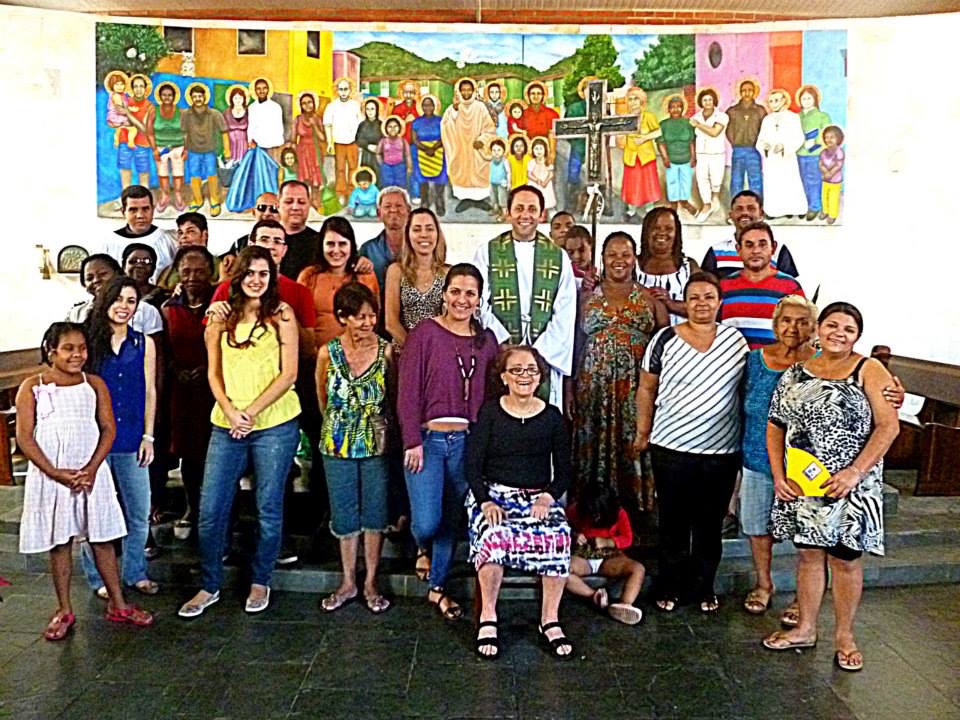
With the community of Christ the King, the Anglican mission I served in a Brazilian “favela” named “The City of God”
As I began to embrace and increasingly value my multi-faith background, I began to increasingly try and build bridges of reconciliation and understanding – across lines of religious difference – wherever and whenever possible. These interfaith ministry connections were enormously life giving for me.
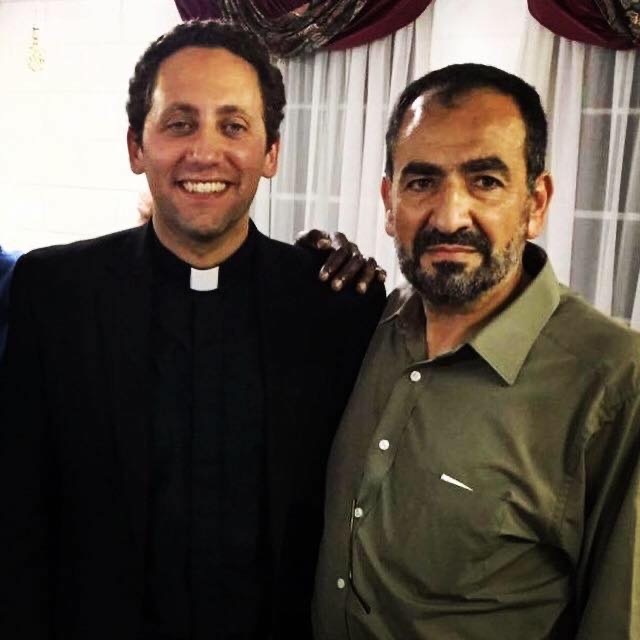
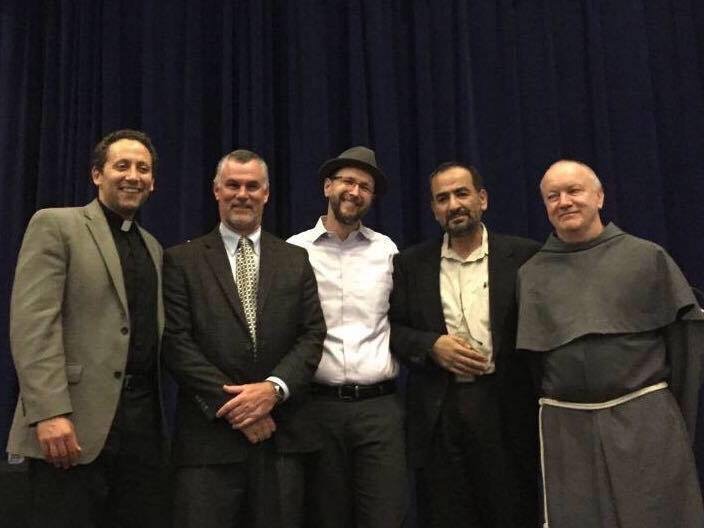
Standing with Shaher Sayed, the prayer leader for the Mosque in Burlington, NC Pictured alongside other speakers at an interfaith conversation in Burlington, NC
By the time I got ordained and married, I was in a new place and yet, I had lost touch with my biological father. It had been years since we last talked. But somehow, some way, Hamada tracked me down.
He called me, out of the blue, one afternoon when I was in my late twenties and we caught up… on a lot. In that single phone call, I told him that my mother had died, that I had gotten married, and that I was now an ordained Episcopal priest (not exactly a dream occupation for the first-born son of a Muslim man). In turn, he would share that he had fathered more children and had married a second wife. I was now the oldest of seven. Pretty unbelievably, we both hung in there with one another. That call, coupled with the encouragement of my wife and mother-in-law (whose own father had abandoned her in childhood), led to a decision to make a trip to Egypt for the first time.
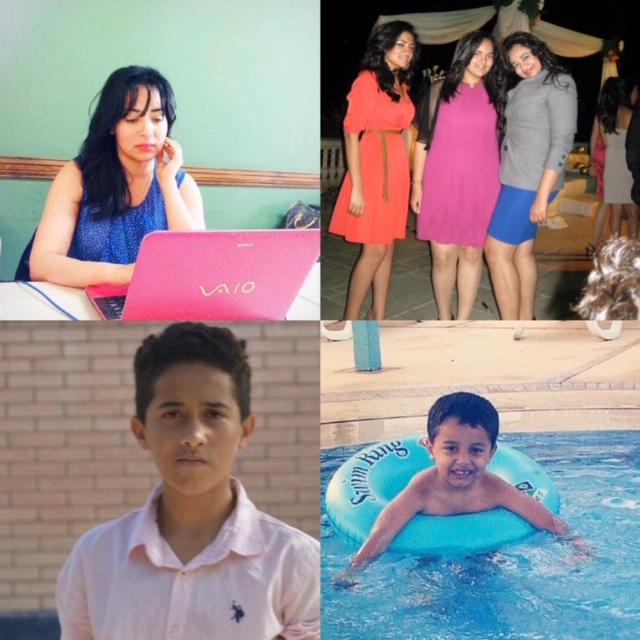
While still anxious, at the age of 30, I said “yes” to Egypt not only out of a desire to finally see this motherland of mine and reconcile with my father but also because I desired to be in relationship with my six half-siblings, Yousra, Hend, Nour, Sama, Yehia, and Hamza.
As someone raised as an only-child, I yearned to meet and get to know each of them. I wanted to try and build a connection.
And then, just as I was about to depart for this long awaited trip to Egypt, at the age of 31, on January 25th, 2011, history intervened.
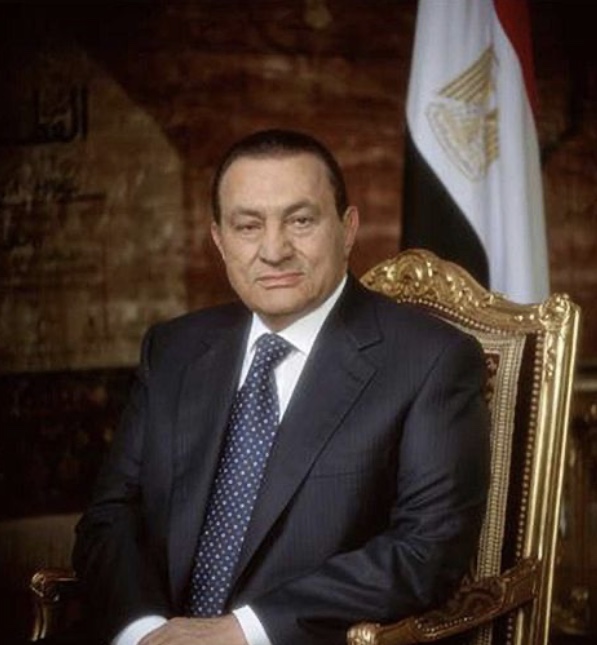
The seemingly invincible Egyptian President Hosni Mubarak, who had ruled the country with an ironclad grip since nearly the day I was born, was forced from power the same day my wife and I were to board our plane for Cairo.
Modern day pharaoh, Mubarak
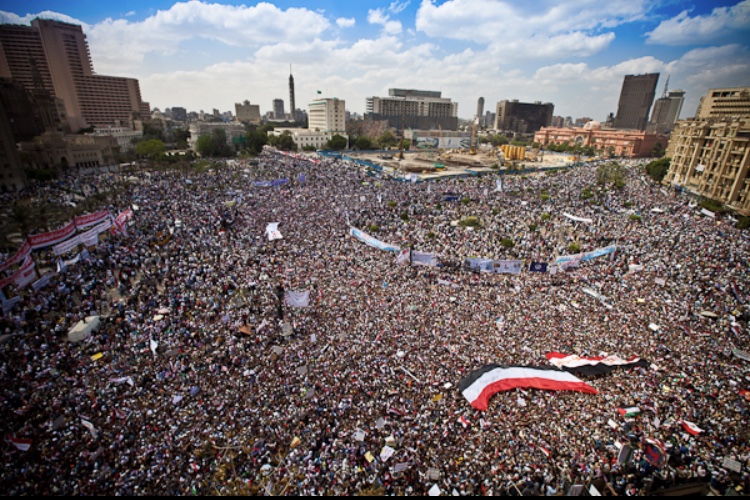
The Egyptian Revolution had begun in Tahrir Square that quickly overwhelmed the government.
Cairo was in chaos and my trip simply could not happen but channels of communication had been reestablished with my father.
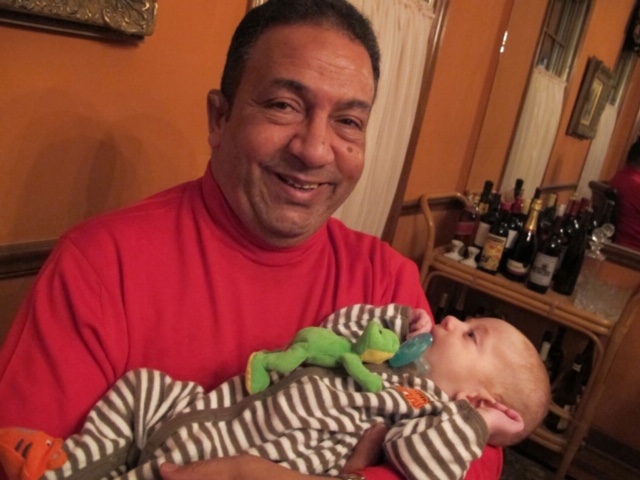
When my son Malcolm was born, while I was serving as a priest in Burlington, NC, my biological father, and an uncle, Rabia, came to visit to celebrate with us. My son was Hamada’s first grandchild.
Hamada and Malcolm
Shockingly, Hamada was jailed by the Egyptian government shortly after his trip to Burlington. While he was imprisoned, my two daughters were born and time marched on. These years left me wondering again if my father would ever see me set foot on Egyptian soil.
What finally spurred me to try again and plan for this impending trip will be the subject of my next post.
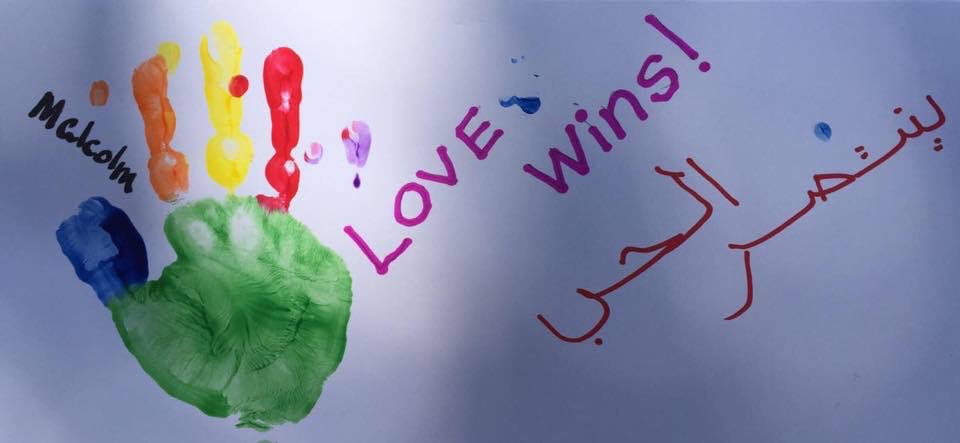
Art work created by my son – in English and Arabic – at the bilingual school I helped to found at the church I served in Burlington, NC
My mother wrote scores of lengthy letters during the years she lived in Egypt.
In reading through them now, over forty years later, I am struck by the radically counter-cultural life she embraced in marrying my biological father. These very personal missives give an eye-opening glimpse into the life of a young American woman, in her early twenties, attempting to learn how to adjust to married life in a foreign language, culture, and religious context. They detail everything from a vivid description of her marriage ceremony to life as a part of my father’s large Muslim family.
My grandmother and an uncle at home.
The letters also reveal quotidian realities such as her adventures in learning Arabic to experimenting in Egyptian cuisine to the challenge of cleaning dust out of a Luxor apartment. She writes about encounters on the streets, the atmospherics and about her work as a tour guide for the family business. It must have been an exciting time but awfully overwhelming as well.
There is also clear evidence in these letters that, just prior to my birth, both she and my father were open to the possibility of making a permanent move to the United States. In hindsight, I’m not sure my father was ever going to be as game for the culture shock of life in America as my mother was for life in Egypt. He was a young Egyptian man, full of Mediterranean machismo, who tried to live in New York City, as a new father, the way he had lived in Egypt.
The marriage did not last long and the dissolution of this marriage changed everything for me. Everything that would have been, prior to that divorce, was simply not meant to be after it had been finalized.
The day my father returned home to Egypt, leaving my mother and I behind in New York, was the day a great divide began that I have struggled to bridge all my life. This divide has not just been the result of distance – of separation by oceans, continents, and time zones – but of language, culture, religion, and way of life. This divide, like the divide between America and the Middle East, has often been exacerbated by mistrust, lack of understanding, and evolving political realities. At times, it’s all felt pretty insurmountable to me.
It did not take long for my parents to find other partners and construct new familial realties. My father would soon marry an Egyptian woman and have the first of six more children when my half-sister Yousra was born.
My mother would marry the only man I have ever known as “dad,” Tom Shoemaker, a lapsed Irish Catholic from the western suburbs of Chicago.
My biological father would periodically come to visit and would meet me and mother for lunch in Manhattan.
These somewhat awkward encounters would usually end with him asking when I might come to Egypt. Each time, my mother would refuse to consider the possibility on the recommendation of the United States State Department. They told her there would be little they could do to stop my father from keeping me in Egypt if I ever went as a minor.
As a child, I could feel the tension between the adults in my life that revolved around things like visitation rights, adoption, and potential travel to Egypt. This tension, coupled with my desire to not appear different or, even worse, “exotic,” made me turn away from my Egyptian side. I was never taught Arabic or taught to value my Egyptian roots. I never grew up with Egyptian friends or family members. If anything, this side of myself was not spoken about or acknowledged at all. As an adult, I can sympathize with why this was never nurtured in me by my mom or by my dad, Tom. But I can also say, in hindsight, that this did not help my emerging sense of self.
The division in my family left me a divided person. I did not like my Semitic nose or features. I was teased at school for my somewhat kinky hair or for any mention of my Egyptian background.
In time, I began to internalize American biases of the Middle East. Just as this part of the world is easily scapegoated by American politicians, my Egyptian background became an easy scapegoat for anything I did not like about myself. This internal struggle created obvious divisions inside my own heart and mind that have taken a long while to heal.
I have often thought that, as Islam is a patrilineal religion and Judaism a matrilineal one, there is a way in which I am indelibly a part of each of the Abrahamic faith traditions and yet, as a young person, I struggled with a sense of belonging. I never quite felt like I entirely fit in anywhere. The diversity of my background did not feel so much like a blessing but a burden that I could not figure out how to navigate.
By the time my mother died of leukemia, at the age of 46, when I was a senior in college (and taking a course with the Holocaust survivor and writer, Elie Wiesel), I was ready to forget my Egyptian roots. I turned my back on my biological father right then and there. I stopped returning his messages. I did not want to think about it. But he never gave up. I have, over the years, given Hamada every reason to forget about me and tend to his fully Egyptian children but he has continued to try to have a relationship despite the distance and despite the enormous differences between us. Now that I’m a father, I appreciate that effort all the more.
How I began to truly my embrace my background and move towards reconciliation and this impending trip to Egypt will be the subject of my next post.








 Finding my Egyptian Roots